


The hardware industry presents a unique set of challenges for startups. Unlike software companies, which can iterate rapidly with minimal marginal cost, hardware ventures are bound by physical constraints, manufacturing lead times, and complex logistics networks. This article examines a comprehensive Five Forces Analysis Case Study focused on a fictional hardware startup, Nexus Hardware Solutions, as it attempts to establish market presence while managing significant supply chain vulnerabilities.
Understanding the competitive landscape is not merely an academic exercise; it is a survival mechanism. By applying Porter’s Five Forces framework, Nexus identified critical leverage points and threats that could dictate its financial health and operational stability. The following breakdown details how this analysis was conducted, the insights gained, and the strategic shifts implemented to mitigate risk.
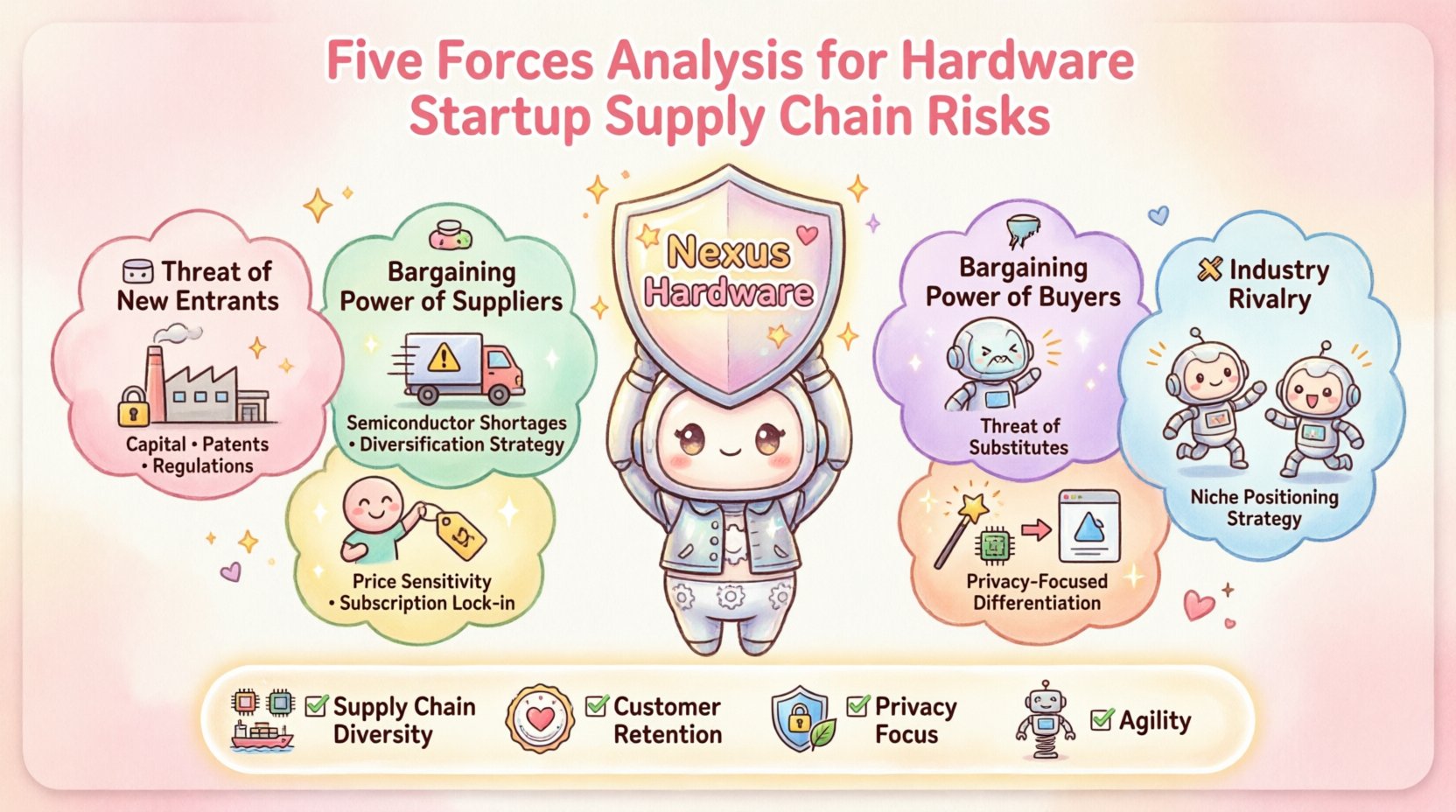
🏭 The Context: Nexus Hardware Solutions
Nexus Hardware Solutions entered the market with a proprietary smart home security device. Their value proposition relied on superior encryption and seamless integration with existing home automation ecosystems. However, the path from prototype to mass production was fraught with obstacles.
The company faced immediate pressure from established competitors who held significant market share. Additionally, the global supply chain environment was volatile, with semiconductor shortages affecting production schedules. Nexus needed a structured approach to navigate these complexities.
The strategic team undertook a deep dive into the industry structure. The goal was not just to understand where they stood, but to anticipate where the pressure points would emerge. This hardware startup supply chain risks assessment became the cornerstone of their two-year operational plan.
🔍 Force 1: Threat of New Entrants
One of the primary concerns for any hardware startup is the barrier to entry. In the consumer electronics space, capital requirements can be prohibitive, yet the temptation for larger conglomerates to acquire niche technologies remains high.
Barriers to Entry Analysis
- Capital Intensity: Setting up a manufacturing line requires significant upfront investment. Nexus managed this by utilizing contract manufacturers (CMs) rather than building proprietary factories.
- Patent Protection: Intellectual property serves as a defensive moat. Nexus secured patents for their unique sensor fusion algorithm, creating a legal hurdle for copycats.
- Brand Loyalty: Consumers often stick with known brands. Overcoming this required aggressive marketing and a focus on user experience.
- Regulatory Compliance: Electronics must meet various safety and certification standards (e.g., FCC, CE). Navigating this bureaucracy delayed time-to-market by several months.
While the threat of new entrants was moderate, the risk of large incumbents launching a similar product was higher. The analysis indicated that Nexus needed to accelerate their time-to-market to establish brand recognition before larger players could respond.
📦 Force 2: Bargaining Power of Suppliers
This force proved to be the most critical risk factor for Nexus. The hardware supply chain is characterized by long lead times and concentrated supplier bases.
Supplier Dependency Risks
- Semiconductor Availability: The microcontroller units (MCUs) required for their device were sourced from a limited number of foundries. When global demand spiked, Nexus faced allocation shortages.
- Raw Material Costs: The price of rare earth metals and plastics fluctuated based on geopolitical factors. Without long-term contracts, these costs impacted margins directly.
- Switching Costs: Changing suppliers meant requalifying components and adjusting firmware, a process that could take months. This locked Nexus into existing relationships.
To mitigate mitigating supplier power hardware risks, Nexus diversified its supplier base. They qualified secondary vendors for critical components, even if those vendors offered slightly lower volume discounts. This redundancy came at a higher cost but provided insurance against stockouts.
Supplier Power Assessment Table
| Component | Supplier Count | Switching Cost | Negotiation Leverage |
|---|---|---|---|
| Microcontrollers | Low (2-3) | High | Low |
| Enclosures | High (10+) | Low | Medium |
| Displays | Medium (4-5) | Medium | Medium |
| Batteries | Medium (3-4) | Medium | Medium |
The table above illustrates where Nexus had leverage and where they were vulnerable. The microcontroller supply chain remained the single point of failure. Strategic inventory buffering was implemented to cover at least three months of production during periods of high volatility.
🛒 Force 3: Bargaining Power of Buyers
Buyers in the consumer electronics market are well-informed and price-sensitive. The availability of information online means customers can compare specifications and prices instantly.
Buyer Dynamics
- Price Sensitivity: While Nexus positioned itself as a premium brand, the market was saturated with cheaper alternatives. Customers were willing to compromise on features for a lower price.
- Information Availability: Reviews on third-party sites heavily influenced purchasing decisions. A single negative review regarding reliability could cause significant sales dips.
- Switching Costs: For consumers, the cost of switching from one security brand to another is low. There are no physical barriers preventing them from buying a competitor’s device.
- Demand Elasticity: Demand for security devices remained relatively inelastic, as safety is a fundamental need. However, economic downturns could delay discretionary purchases.
To counter high buyer power, Nexus focused on customer retention rather than just acquisition. They introduced a subscription-based service for cloud storage and advanced analytics. This created recurring revenue and increased the switching cost for users, as they would lose access to their recorded history upon leaving the ecosystem.
🔄 Force 4: Threat of Substitute Products
Innovation in the tech sector moves quickly. A hardware product can become obsolete not because of a competitor, but because of a new technology or method of solving the same problem.
Substitution Scenarios
- Software-Only Solutions: As cameras improved, software-based security (using existing home cameras) became a viable alternative to dedicated hardware.
- Competing Form Factors: Voice-activated assistants integrated security features directly into speakers, reducing the need for separate hubs.
- Service Providers: Professional monitoring services offered comprehensive protection without requiring the homeowner to manage devices.
Nexus had to ensure their device offered a unique value proposition that software alone could not replicate. They focused on local processing and privacy, positioning the device as a security tool that did not require constant internet connectivity. This differentiation helped mitigate the threat of substitutes.
⚔️ Force 5: Industry Rivalry
The competitive rivalry in the smart home security space is intense. Established giants dominate the landscape, but agile startups often carve out niches.
Competitive Landscape
- Price Wars: Incumbents often lower prices to maintain market share, squeezing the margins of smaller players.
- Feature Creep: Competitors frequently release new models with additional features, forcing Nexus to accelerate their own R&D cycles.
- Marketing Spend: The cost of acquiring customers in this sector is high due to the volume of advertising spend by major brands.
- Market Saturation: As the market matures, growth slows, and competition for share intensifies.
Nexus avoided direct price competition by focusing on a specific niche: privacy-conscious homeowners. By marketing their local-first architecture, they appealed to a segment that felt underserved by the major players who relied heavily on cloud processing. This competitive rivalry electronics industry strategy allowed them to carve out a sustainable position without engaging in a race to the bottom.
🛠️ Operationalizing the Analysis
Conducting the analysis was only the first step. The real value came from translating these insights into actionable operational changes. Nexus implemented several key strategies based on the Five Forces findings.
Strategic Adjustments
- Supply Chain Diversification: Reduced reliance on single-source suppliers for critical components.
- Inventory Management: Adopted a just-in-case model for high-risk components to buffer against shortages.
- Customer Lock-in: Introduced subscription services to increase switching costs.
- Product Differentiation: Emphasized privacy and local processing to distinguish from cloud-dependent competitors.
- Partner Ecosystems: Formed alliances with home automation platforms to expand reach without increasing marketing spend.
📉 Financial Implications
The decisions made based on this analysis directly impacted the financial structure of the company. While diversifying suppliers increased the cost of goods sold (COGS), it reduced the risk of production stoppages. The shift toward subscription revenue improved cash flow predictability.
Investors noted the strategic depth of this approach. By understanding the structural forces of the industry, Nexus was able to present a more robust business plan that accounted for external threats, not just internal growth projections.
🔧 Key Takeaways for Hardware Entrepreneurs
For any entrepreneur entering the hardware space, the lessons from this case study are clear. The physical nature of the product introduces constraints that software companies do not face. A deep understanding of the industry structure is essential.
- Don’t Ignore Supply Chains: They are often the weakest link in hardware startups.
- Differentiate on Value, Not Just Price: Competing on cost is a losing battle against large incumbents.
- Build Barriers to Exit: Create reasons for customers to stay, whether through services or ecosystems.
- Monitor Substitutes: The biggest threat may come from a different technology solving the same problem.
- Stay Agile: The market changes rapidly. Flexibility is a competitive advantage.
📈 Long-Term Sustainability
Sustainability in hardware requires a balance between innovation and operational stability. The Five Forces framework provides a lens through which to view the long-term viability of a business model. It forces founders to look beyond the product and consider the entire ecosystem in which it operates.
Nexus Hardware Solutions continues to evolve. As new technologies emerge, they re-evaluate the forces annually. This iterative process ensures that the company remains resilient against shifting market dynamics. The initial analysis provided a foundation, but the ongoing application of these principles ensures continued relevance.
📝 Final Thoughts on Strategic Planning
Strategic planning in hardware is not a one-time event. It is a continuous process of adaptation. The Five Forces framework offers a structured way to think about competition and risk. By applying this rigor, startups can navigate the treacherous waters of the hardware industry with greater confidence.
The path from concept to commercial success is steep. It requires a clear understanding of the battlefield. Whether it is supplier negotiations, customer acquisition costs, or the threat of obsolescence, every decision should be informed by a deep understanding of the industry structure. For Nexus, this approach transformed potential vulnerabilities into manageable risks.
Entrepreneurs should view these forces not as static barriers, but as dynamic elements that can be influenced. While some factors, like supplier concentration, are difficult to change, others, like buyer loyalty, can be shaped through product design and service quality. The key is to identify which forces you can control and which you must adapt to.
Ultimately, success in hardware comes from aligning your internal capabilities with external realities. The Five Forces analysis is a tool to help make that alignment visible. It highlights the gaps between where you are and where the market is pushing you. Bridging those gaps requires discipline, foresight, and a willingness to pivot when the data demands it.
As the market continues to mature, the competition will only intensify. Startups that ignore the structural forces of their industry risk being swept away by forces beyond their control. Those that embrace the analysis and build strategies around it stand a better chance of long-term survival and growth.