


Business strategy relies heavily on understanding the competitive landscape. While many frameworks exist, Porter’s Five Forces remains a cornerstone for analyzing industry attractiveness and profit potential. In the modern technology sector, specifically within Software as a Service (SaaS), the dynamics have shifted significantly. The traditional view of suppliers has evolved from raw material providers to critical infrastructure partners, platform owners, and data custodians.
This guide examines Supplier Power within the context of the SaaS ecosystem. We will explore how vendor leverage impacts operational stability, pricing models, and long-term scalability. By understanding these forces, organizations can build resilient architectures and negotiate more favorable terms without compromising innovation.
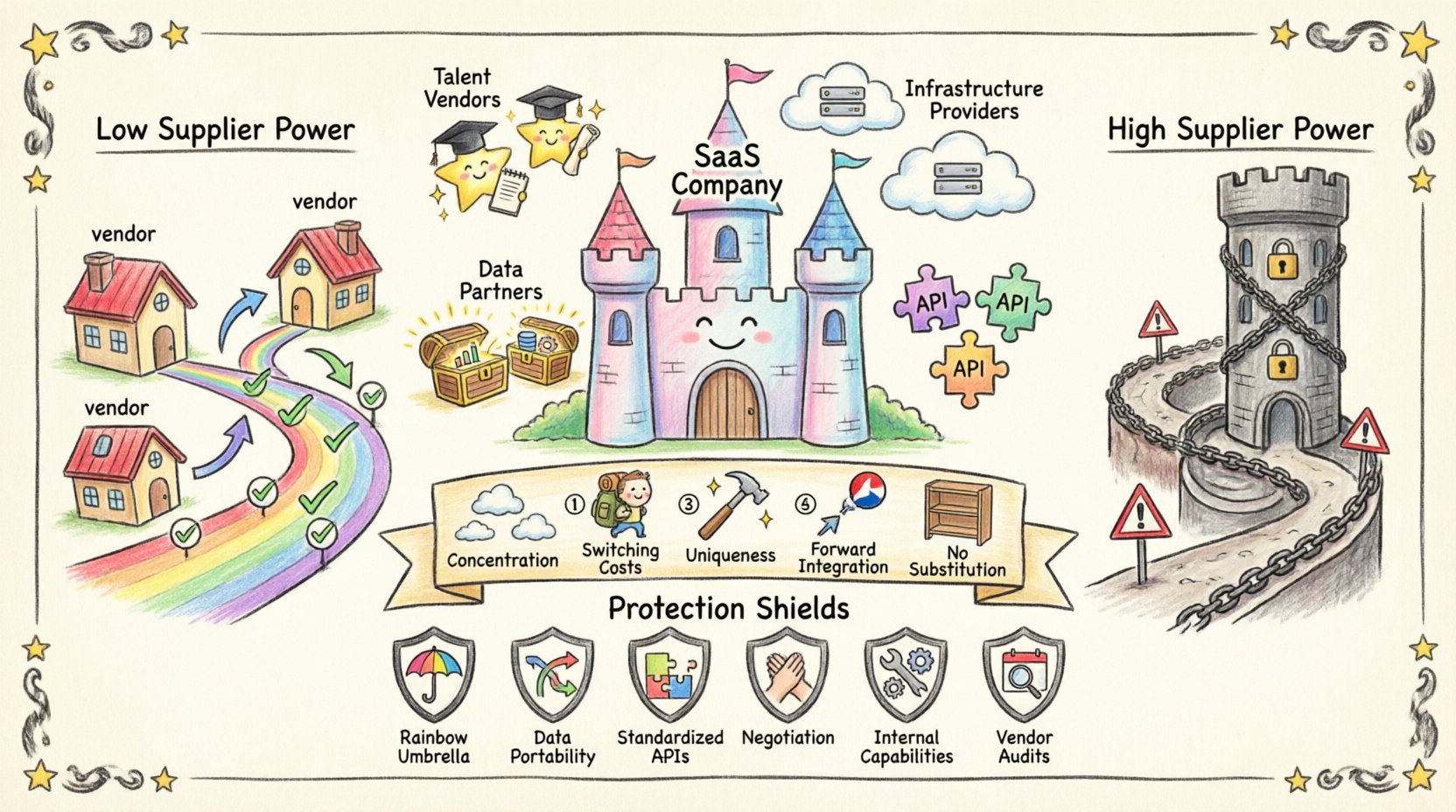
Defining Supplier Power in the Digital Age ⚙️
Supplier power refers to the ability of vendors to influence prices, quality, and service levels. In a manufacturing context, this might mean a steel mill controlling costs for a car factory. In the SaaS world, suppliers are often cloud infrastructure providers, API integrators, or niche software tools that form the backbone of an application.
High supplier power means vendors can dictate terms, leading to increased costs or reduced service reliability. Low supplier power suggests a competitive market where buyers hold the advantage. The SaaS era introduces unique complexities to this dynamic.
- Infrastructure Providers: These entities own the servers, networking, and storage.
- Platform Owners: Companies that provide the operating environment or app stores.
- Data Partners: Organizations controlling access to critical datasets or user bases.
- Talent Vendors: Agencies or training platforms supplying specialized human capital.
When analyzing supplier power, it is essential to look beyond the direct software license. The dependency on a specific technology stack often creates hidden leverage points.
The SaaS Landscape Shifts 🌐
The transition from on-premise software to cloud-based services has altered the balance of power. Historically, companies built their own hardware and maintained their own code. Today, outsourcing infrastructure allows for speed and agility but introduces reliance on external entities.
Key Shifts in Vendor Dynamics
- Centralization: A few major providers dominate the cloud market, increasing their leverage.
- Integration Depth: Modern applications rely on dozens of APIs, creating a web of dependencies.
- Data Gravity: Data accumulates in specific ecosystems, making it difficult to move.
- Ecosystem Lock-in: Proprietary tools and workflows make switching costly and complex.
These shifts mean that supplier power is no longer just about price. It is about continuity, security, and the ability to innovate without permission from a third party.
Drivers of Supplier Power 📉
Several factors contribute to the level of power a supplier holds over a SaaS organization. Identifying these drivers is the first step in strategic planning.
1. Concentration of Supply
If there are only a few suppliers available for a critical component, power shifts to them. For example, if a SaaS company relies on a specific type of database engine that only one vendor offers, that vendor holds significant leverage.
2. Switching Costs
High switching costs occur when moving from one provider to another is expensive or technically difficult. This includes data migration expenses, retraining staff, and downtime risks. The higher these costs, the stronger the supplier’s position.
3. Uniqueness of Product
Proprietary technology that offers a distinct advantage can create a monopoly. If a supplier offers a feature that no competitor can match, customers have little choice but to pay the premium.
4. Threat of Forward Integration
Suppliers may decide to compete directly with their customers. If a platform provider starts offering a direct-to-consumer version of the software you sell, they become both supplier and competitor.
5. Lack of Substitution
If there are no viable alternatives to a specific tool, supplier power is high. This is common in niche markets where specialized functionality is required.
Comparing Low vs. High Supplier Power 📊
To better understand the impact, consider the following comparison of scenarios.
| Factor | Low Supplier Power | High Supplier Power |
|---|---|---|
| Number of Vendors | Many competitors available | Few or single vendor dominance |
| Switching Costs | Low; easy data export | High; proprietary formats required |
| Standardization | Open standards and protocols | Proprietary APIs and closed systems |
| Pricing Flexibility | Market-driven negotiation | Take-it-or-leave-it terms |
| Innovation Pace | Collaborative roadmap input | Vendor dictates feature release |
Indicators of High Supplier Power in SaaS 🔍
Recognizing when you are in a vulnerable position requires careful observation of specific signals. The following indicators suggest that a supplier may be exerting excessive influence.
- Price Increases: Regular, unannounced price hikes without added value.
- Feature Gates: Critical capabilities moved behind higher-tier pricing plans.
- API Deprecation: Removing access to previously available endpoints without warning.
- Data Restrictions: Limits on how much data can be exported or how often.
- Support Delays: Increased wait times for technical assistance.
- Contract Rigidity: Inability to negotiate terms or exit clauses.
Ignoring these signs can lead to budget overruns and operational bottlenecks. It is crucial to monitor these metrics regularly as part of vendor management.
Strategies to Mitigate Supplier Dependence 🛡️
Organizations can take proactive steps to reduce reliance on powerful suppliers. The goal is not to eliminate all dependencies, but to maintain enough autonomy to survive market shifts.
1. Diversification of Vendors
Avoid relying on a single provider for critical infrastructure. Using multiple cloud providers or mixing open-source solutions with proprietary tools can reduce risk. This approach, often called a multi-cloud strategy, ensures that if one vendor fails or raises prices, others are available.
2. Data Portability Standards
Insist on open data formats. Ensure that all data can be exported in standard formats like CSV, JSON, or SQL. Avoid proprietary databases that lock data into a specific ecosystem. Regular audits should verify that data export is functional and complete.
3. Standardized APIs
Build integrations using open standards wherever possible. If a vendor forces a proprietary API, create an abstraction layer in your architecture. This layer allows you to swap the backend provider without rewriting the entire application.
4. Negotiation Leverage
Use volume commitments and long-term contracts to negotiate better rates. Show potential for growth to the vendor. If you are a strategic partner rather than a small customer, you gain more influence.
5. Build Internal Capabilities
Develop in-house expertise for critical functions. Instead of relying entirely on a managed service, maintain the ability to manage the underlying systems yourself. This reduces the risk of vendor lock-in.
6. Regular Vendor Audits
Conduct annual reviews of all software and service contracts. Assess the current market position of each supplier. Identify if a newer, cheaper, or more flexible competitor has emerged.
Case Scenarios in the SaaS Industry 🏗️
Understanding theoretical concepts is helpful, but real-world application clarifies the stakes. Consider the following generic scenarios.
Scenario A: Database Dependency
A SaaS company uses a specialized, proprietary database provided by a single vendor. As the company grows, query performance slows, and the vendor raises prices. The company finds that migrating data to an open-source alternative requires significant engineering hours. This is a classic case of high switching costs creating supplier power.
Scenario B: API Ecosystem
A business relies on a specific payment gateway to process transactions. The gateway changes its API structure, breaking the company’s checkout flow. Because the gateway controls the payment infrastructure, the company cannot easily switch without losing revenue during the transition.
Scenario C: Talent Scarcity
A specialized software requires a rare skill set. The only training providers for this skill are expensive and limited. The suppliers of talent effectively control the cost of labor, which impacts the overall cost of goods sold.
The Future of Vendor Relationships 🔮
The landscape of supplier power is not static. Emerging trends will continue to reshape how organizations interact with their vendors.
- Open Source Resurgence: More enterprise-grade open-source options are becoming available, challenging proprietary dominance.
- AI Integration: Artificial intelligence tools are creating new dependencies. Vendors controlling access to large language models may gain significant leverage.
- Regulatory Pressure: Government regulations regarding data sovereignty and interoperability may force vendors to lower barriers.
- Decentralization: Blockchain and distributed ledger technologies offer alternative methods for trust and transaction, potentially bypassing traditional intermediaries.
Organizations must remain agile. Strategies that worked five years ago may not apply today. Continuous monitoring of the technological horizon is essential.
Frequently Asked Questions ❓
Common questions arise when discussing supplier power in the software sector. Here are answers to frequent inquiries.
What is the biggest risk of high supplier power?
The primary risk is loss of control over your own product roadmap and margins. If a supplier raises prices or changes terms, your profitability suffers immediately.
How do I measure switching costs?
Calculate the total cost of migration, including data transfer, retraining, downtime, and potential customer churn. This gives a clear financial picture of the barrier to exit.
Is open source always better for reducing power?
Not necessarily. Open source software often requires more internal maintenance. While it avoids vendor lock-in, it shifts the burden to your engineering team. The decision depends on your internal resources.
How often should I review vendor contracts?
At least annually. Quarterly reviews are recommended for critical infrastructure components. Market conditions change rapidly in the technology sector.
Final Thoughts on Strategic Autonomy 🧭
Navigating the Five Forces requires a balanced view of risk and opportunity. Supplier power is a significant factor in the SaaS era, influencing everything from profit margins to operational resilience. By understanding the drivers of this power, organizations can make informed decisions.
The goal is not to win a negotiation battle, but to build a sustainable business model. This involves diversifying dependencies, ensuring data portability, and maintaining internal expertise. When you reduce reliance on any single entity, you gain the freedom to focus on your core value proposition.
Strategic planning is an ongoing process. As technology evolves, so do the power dynamics. Stay vigilant, keep your options open, and prioritize flexibility in all architectural decisions.