In the landscape of project management, a persistent challenge remains: the disconnect between high-level strategy and ground-level execution. Many organizations possess robust strategic visions, yet fail to translate these intentions into tangible project outcomes. This gap often results in wasted resources, missed deadlines, and diluted value. Understanding how to align daily operations with long-term goals is essential for sustainable success. This article explores the mechanisms required to integrate strategic intent with practical project planning.
Why Projects Fail to Meet Strategic Goals 🛑
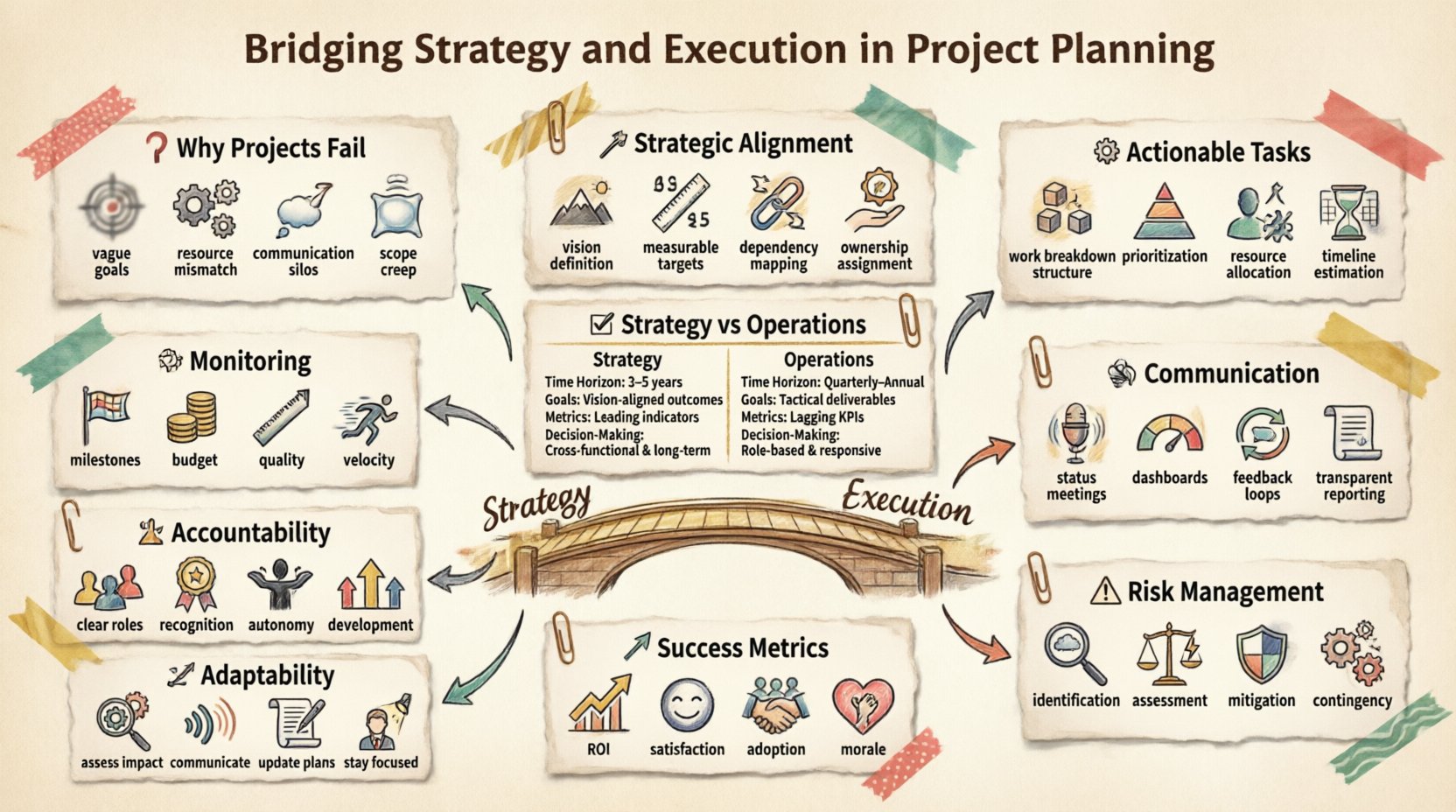
When a project launches, the initial enthusiasm often masks underlying structural issues. Without a clear line of sight from the executive suite to the individual task, efforts become fragmented. Teams may focus on completing tasks efficiently without asking if those tasks contribute to the broader mission. This misalignment creates a scenario where work is done, but value is not delivered.
Common reasons for this failure include:
- Lack of Clear Objectives: Goals are vague or not communicated effectively across departments.
- Resource Mismatch: Projects are assigned resources that do not match the required skill sets or availability.
- Communication Breakdown: Information silos prevent stakeholders from understanding progress or changes.
- Scope Creep: Uncontrolled changes to the project scope dilute the original strategic focus.
- Insufficient Monitoring: Lack of regular review points means deviations are not caught until it is too late.
Establishing Clear Strategic Alignment 🎯
The foundation of successful execution lies in precise alignment. This process involves translating abstract business goals into concrete project deliverables. Every task assigned should answer the question: “How does this support the strategic vision?”
To achieve this, leaders must engage in the following steps:
- Define the Vision: Articulate the end state clearly. Avoid jargon and ensure the message is accessible to all team members.
- Set Measurable Targets: Use specific metrics to track progress. Quantifiable goals allow for objective assessment of performance.
- Map Dependencies: Identify how different tasks rely on one another. Understanding these relationships prevents bottlenecks.
- Assign Ownership: Designate clear owners for each strategic pillar. Accountability ensures someone is responsible for the outcome.
Translating Vision into Actionable Tasks ⚙️
Once the strategy is defined, it must be broken down into manageable components. This decomposition allows teams to focus on immediate actions without losing sight of the bigger picture. The goal is to create a workflow where every step logically leads to the next, culminating in the desired result.
Consider the following approach for task translation:
- Work Breakdown Structure: Divide the project into phases, then into tasks, and finally into sub-tasks.
- Prioritization: Rank tasks based on their impact on strategic goals. High-impact activities receive priority.
- Resource Allocation: Assign personnel based on competence and capacity, not just availability.
- Timeline Estimation: Create realistic schedules that account for potential delays and dependencies.
Operationalizing the Plan 📋
Strategy lives in the boardroom, but execution happens in the workspace. Bridging this divide requires a shift in mindset. Teams must view their daily activities as contributions to a larger narrative. The following table highlights the distinction between strategic and operational focus.
| Aspect | Strategic Focus | Operational Focus |
|---|---|---|
| Time Horizon | Long-term (Years) | Short-term (Days/Weeks) |
| Goal | Market Positioning | Task Completion |
| Metrics | ROI, Market Share | Productivity, Quality |
| Decision Making | High-level Direction | Tactical Adjustments |
Effective project planning requires constant interaction between these two levels. Leaders must ensure that operational successes accumulate to form strategic wins.
Communication and Stakeholder Engagement 🗣️
Information flow is the lifeblood of project execution. When communication is sporadic or unclear, alignment erodes. Stakeholders at all levels need access to relevant data to make informed decisions. Regular updates foster trust and keep the team synchronized.
Key communication practices include:
- Regular Status Meetings: Schedule consistent check-ins to review progress and address blockers.
- Dashboards: Visual representations of data help stakeholders grasp complex information quickly.
- Feedback Loops: Create channels for team members to report issues or suggest improvements without fear of reprisal.
- Transparent Reporting: Share both successes and failures openly. Hiding problems prevents timely intervention.
Risk Management and Contingency Planning ⚠️
Uncertainty is inherent in project planning. Risks can derail even the most well-crafted strategies. Proactive risk management involves identifying potential threats before they materialize. This process allows the team to prepare responses in advance.
Steps for effective risk management:
- Identification: Brainstorm potential risks with the team. Look at historical data from similar projects.
- Assessment: Evaluate the likelihood and impact of each risk. Prioritize high-probability, high-impact threats.
- Mitigation: Develop plans to reduce the probability or impact of the risk.
- Contingency: Prepare backup plans for when risks become realities.
Monitoring Progress and Feedback Loops 📊
Execution is not a linear path. It requires continuous monitoring and adjustment. Project managers must track key performance indicators to ensure the project remains on track. Data-driven insights allow for course corrections before significant deviations occur.
Essential monitoring activities include:
- Milestone Reviews: Evaluate completion of major phases against the plan.
- Budget Tracking: Monitor spending against the allocated budget to prevent overspending.
- Quality Assurance: Ensure deliverables meet the defined standards at every stage.
- Team Velocity: Measure the rate of work completion to adjust future timelines.
Fostering a Culture of Accountability 🤝
Strategy and execution converge in the behavior of the team. A culture where individuals take ownership of their responsibilities is vital. When team members feel responsible for the outcome, they are more likely to go the extra mile.
To build this culture:
- Clarify Roles: Ensure everyone knows what is expected of them.
- Recognize Effort: Acknowledge contributions publicly to reinforce positive behaviors.
- Encourage Autonomy: Allow team members to make decisions within their scope of work.
- Support Development: Provide training to ensure skills match project requirements.
Measuring Success Metrics 📈
Defining success goes beyond delivering on time. It involves evaluating the value the project brings to the organization. Metrics should reflect both the efficiency of the process and the effectiveness of the outcome.
Relevant metrics include:
- Return on Investment (ROI): Financial return relative to the cost of the project.
- Customer Satisfaction: Feedback from end-users regarding the deliverable.
- Adoption Rates: How quickly and widely the solution is used.
- Team Morale: The well-being and engagement of the project team.
Adapting to Change Without Losing Focus 🔄
External factors often change during the project lifecycle. Market conditions, resource availability, and regulatory requirements may shift. Adaptability is crucial, but it must not come at the cost of strategic focus. Changes should be evaluated against the original goals.
When changes occur:
- Assess Impact: Determine how the change affects the timeline, budget, and objectives.
- Communicate Promptly: Inform stakeholders of the change and the rationale behind it.
- Update Plans: Revise the project plan to reflect the new reality.
- Stay Focused: Remind the team of the core objectives to prevent mission drift.
Final Thoughts on Integration 💡
The integration of strategy and execution is an ongoing process, not a one-time event. It requires discipline, clear communication, and a commitment to alignment. By focusing on these principles, organizations can ensure that their project efforts directly support their strategic ambitions. Success is found in the details of how the plan is implemented, not just in the plan itself.
Organizations that master this balance gain a competitive advantage. They deliver value faster, adapt to changes more gracefully, and build trust with their stakeholders. The path forward involves continuous learning and refinement of planning processes. With the right approach, the gap between vision and reality becomes a bridge for growth.