Project management is rarely a one-size-fits-all discipline. Organizations constantly seek the most efficient path from concept to delivery, often finding themselves at a crossroads between two dominant frameworks: Agile and Waterfall. Choosing the wrong path can lead to budget overruns, missed deadlines, or a product that fails to meet market needs. This guide provides a clear, authoritative comparison to help teams make an informed decision based on their specific constraints, goals, and culture. 📊
Understanding the Waterfall Model 🌊
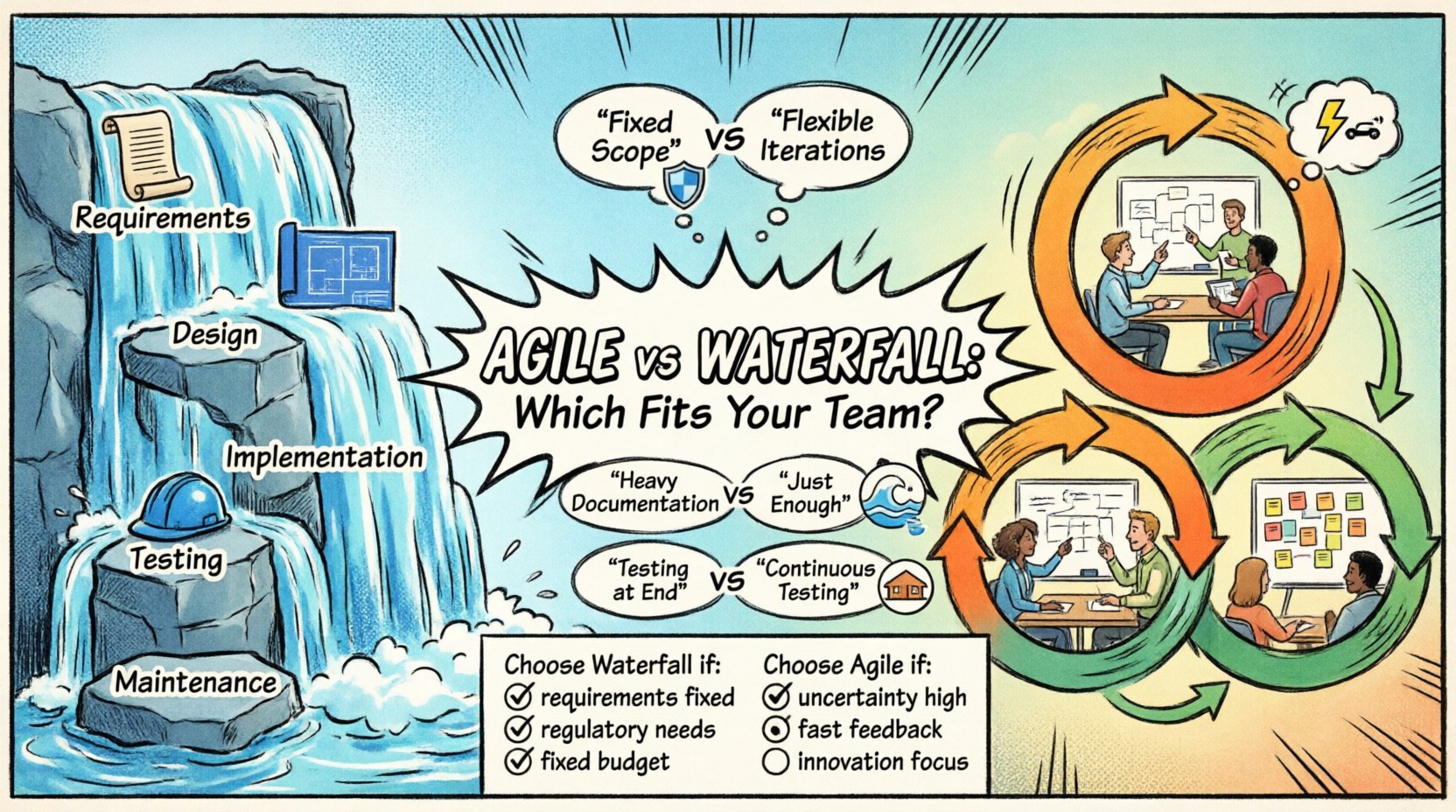
The Waterfall methodology represents the traditional approach to project management. It is a linear, sequential process where progress flows steadily downwards through distinct phases. Much like water flowing down a waterfall, the project moves from one stage to the next without the ability to go back. This structure relies heavily on upfront planning and documentation.
Each phase must be completed and approved before the subsequent phase begins. The typical progression includes:
- Requirements Gathering: Comprehensive documentation of what the project must achieve.
- System Design: Technical specifications and architectural blueprints are created.
- Implementation: The actual building or coding phase takes place.
- Verification: Testing ensures the product meets the initial requirements.
- Maintenance: Ongoing support and updates are handled post-launch.
Because the scope is defined early, Waterfall offers predictability. Stakeholders know exactly what they will get and when it will be delivered, assuming the timeline remains static. This makes it particularly suitable for industries where changes are costly or impossible once work has started, such as construction or manufacturing. 🏗️
Understanding Agile Methodology 🔄
Agile emerged as a response to the rigidity of traditional planning. It focuses on iterative development, collaboration, and flexibility. Instead of delivering the entire project at the end, Agile breaks work into small, manageable chunks called sprints or iterations. Each iteration results in a usable piece of the product.
Key characteristics of Agile include:
- Iterative Progress: Work is delivered in cycles, allowing for frequent feedback.
- Customer Collaboration: Stakeholders are involved throughout the process, not just at the start and end.
- Adaptability: Requirements can change based on market shifts or new insights.
- Self-Organizing Teams: Team members decide how best to accomplish work rather than following a strict command chain.
This approach is highly effective in environments where uncertainty is high, such as software development or creative startups. It prioritizes working software over comprehensive documentation and values responding to change over following a strict plan. 💡
Key Differences at a Glance 📋
Understanding the structural differences is crucial for selecting the right framework. The table below highlights the fundamental distinctions between the two methodologies.
| Feature | Waterfall | Agile |
|---|---|---|
| Flexibility | Low | High |
| Testing | Occurs at the end | Continuous throughout |
| Client Involvement | Low (mostly at start/end) | High (continuous) |
| Documentation | Heavy upfront | Just enough |
| Risk Management | Identified early | Managed iteratively |
| Best For | Fixed scope, regulated industries | Dynamic scope, innovation |
When to Choose Waterfall 🏗️
While often criticized for being rigid, Waterfall remains the standard for specific types of projects. It is the preferred choice when requirements are clear, fixed, and unlikely to change. In these scenarios, the predictability of the model provides significant value.
Consider Waterfall if:
- Requirements are fixed: You know exactly what needs to be built from day one.
- Regulatory compliance is critical: Industries like healthcare or finance often require strict documentation trails that Waterfall supports naturally.
- The budget is fixed: Clients need a guaranteed price before work begins.
- Technology is stable: The tools and methods used are well-understood and proven.
- Team is large: Managing large groups often benefits from clear, hierarchical structures.
For example, building a physical bridge requires a Waterfall approach. You cannot design the foundation after the pillars are already up. The same logic applies to software projects with hard legal deadlines where scope cannot expand.
When to Choose Agile 🏎️
Agile shines in environments where the goal is to find the right solution through exploration. It is designed to handle ambiguity and change. If the market is moving fast, Agile allows teams to pivot without wasting months of effort on the wrong features.
Consider Agile if:
- Requirements are unclear: You know the problem but not the exact solution.
- Speed to market is priority: Getting a minimum viable product out quickly is more important than perfection.
- User feedback drives success: The product needs to evolve based on how users interact with it.
- Innovation is the goal: You are creating something new where risks are unknown.
- Team is cross-functional: Developers, designers, and testers work closely together daily.
Startups and digital product teams often favor Agile because it reduces the risk of building something nobody wants. By releasing early and often, they validate assumptions before investing significant resources.
Team Dynamics and Culture 👥
Beyond the technical process, the choice of methodology impacts how a team operates. Culture is often the deciding factor in whether a methodology succeeds or fails.
Communication Styles
Waterfall relies on formal communication channels. Changes are documented, approved, and tracked through change requests. This creates a paper trail but can slow down decision-making. Agile relies on informal, frequent communication. Daily stand-ups and constant collaboration ensure everyone is aligned, but it requires a high level of trust and transparency.
Role Definitions
In Waterfall, roles are specialized. There is a project manager, a designer, a developer, and a tester. Each person has a specific bucket of work. In Agile, roles are more fluid. While specific titles exist (like Scrum Master), the focus is on collective ownership of the product. Team members often wear multiple hats to ensure the sprint goal is met.
Risk Management Strategies 🛡️
Every project carries risk, but the timing of risk exposure differs between methodologies.
- Waterfall Risks: The biggest risk is discovered late. If a flaw is found during the testing phase, it may require going back to the design phase, which is expensive. However, risks are identified early through planning, allowing for contingency buffers.
- Agile Risks: Risks are addressed early because testing happens continuously. However, there is a risk of scope creep. Without strict discipline, the project can expand indefinitely as new features are added during sprints.
Implementation Considerations 📋
Moving from one methodology to another requires preparation. It is not simply a change of tools, but a change of mindset.
For Waterfall Implementation:
- Invest time in comprehensive requirement gathering.
- Establish clear milestones and approval gates.
- Ensure stakeholders understand that changes will incur cost.
- Use project management boards to track linear progress.
For Agile Implementation:
- Train the team on iterative cycles and feedback loops.
- Define a clear product vision to guide sprints.
- Empower the team to make technical decisions.
- Ensure stakeholders are available for regular reviews.
Hybrid Approaches 🤝
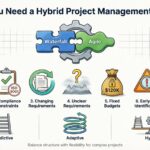
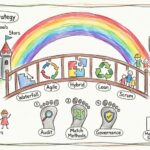
Not all projects fit neatly into one box. Some organizations adopt a hybrid model, often referred to as “Wagile.” This approach might use Waterfall for high-level planning and budgeting while using Agile for the actual development cycles. This can satisfy regulatory requirements while maintaining development flexibility.
For instance, a team might define the budget and timeline using Waterfall metrics but execute the work using Agile sprints. This allows for financial predictability while retaining the ability to adapt the scope within that budget.
Final Decision Framework 🔍
Before committing to a path, ask your team these critical questions:
- Is the scope likely to change during development?
- How important is the timeline compared to the feature set?
- How much stakeholder availability do we have?
- What is the cost of failure for this project?
- Does the team culture support collaboration or hierarchy?
There is no single correct answer. The right choice depends on the specific context of your project. By evaluating these factors objectively, teams can select a methodology that maximizes their chances of success. 🌟