Authoring & Reading Modes | User Experience & Sharing Strategies
Purpose: This comprehensive guide explores both perspectives of the Visual Paradigm Flipbook Reader ecosystem: how authors create and configure flipbooks and how readers experience and interact with published content. Whether you’re building your first flipbook or optimizing your reading workflow, this guide provides actionable insights for maximizing engagement, accessibility, and distribution impact.
🎯 Introduction: Bridging Creation and Consumption
The Visual Paradigm Flipbook Reader (powered by Fliplify) transforms static documents into dynamic, lifelike digital publications. By combining realistic page-flip animations with rich multimedia support and granular customization, Fliplify serves two interconnected audiences:
| Perspective | Primary Goal | Key Outcome |
|---|---|---|
| 🖋️ Author/Creator | Design, configure, and distribute engaging flipbooks | Professional publications that drive engagement, conversions, or learning |
| 👁️ Reader/Viewer | Consume content intuitively across devices | Immersive, accessible reading experiences that feel natural and responsive |
Supported Source Formats: PDF, PPT/PPTX, DOC/DOCX, XLSX, EPUB, MOBI, AZW3/AZW2, JPEG, PNG, and more.
✍️ Part 1: Authoring Mode – Creating & Configuring Flipbooks
Authors use Fliplify’s intuitive, cloud-based flipbook maker to convert, enhance, and publish content. The workflow is drag-and-drop friendly and fully integrated with Visual Paradigm Online’s productivity suite.
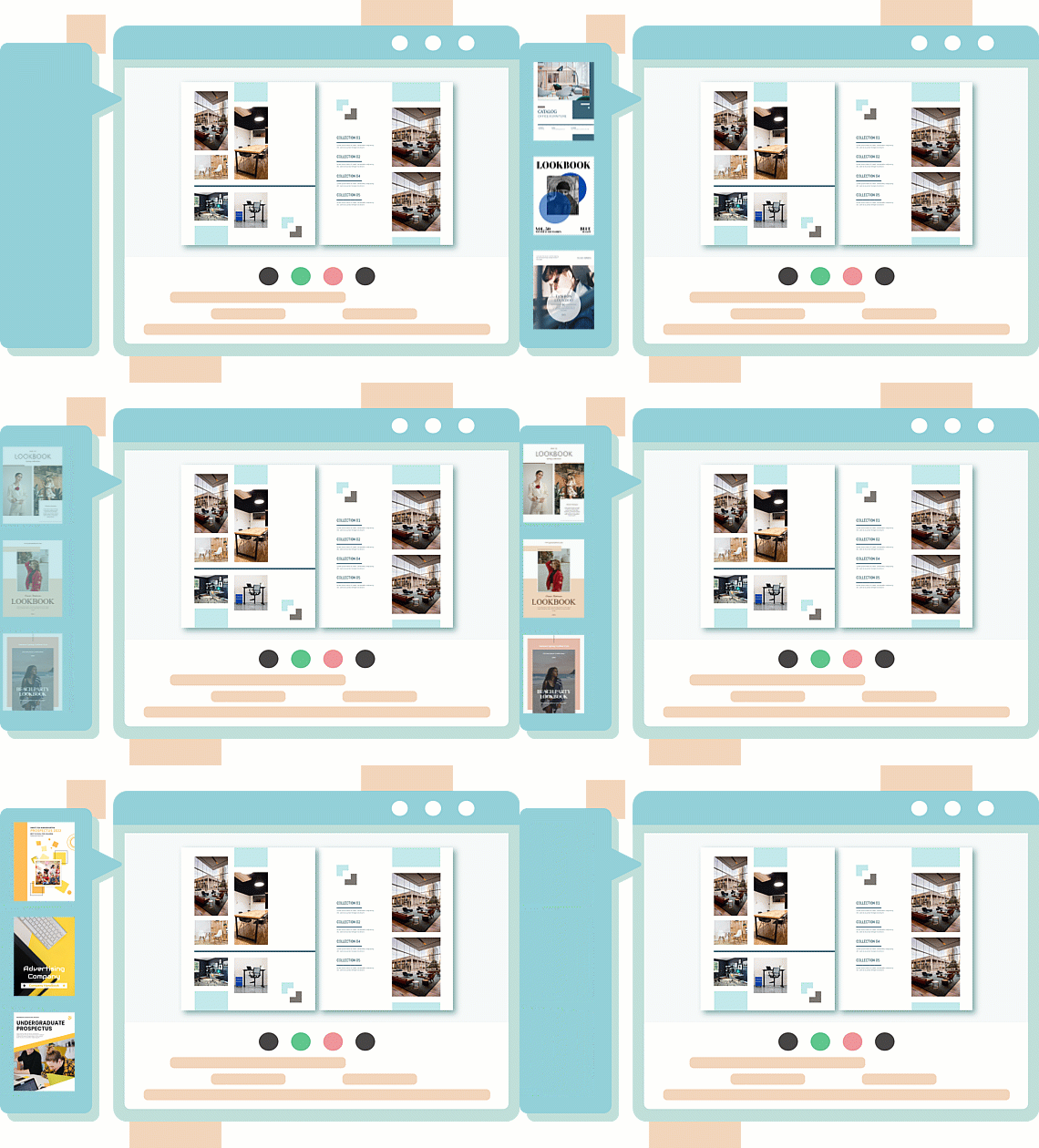
🔹 Step-by-Step Authoring Workflow
1️⃣ Start a New Flipbook
-
Access: Visit Fliplify or launch via Visual Paradigm Online
-
Options:
-
Create from scratch using pre-built templates (catalogs, photo books, reports, e-books, portfolios)
-
Convert existing documents into flipbook format
-
-
Pro Tip: Choose a template aligned with your content type to accelerate design consistency
2️⃣ Upload & Convert Files
| Supported Format | Best Use Case | Conversion Notes |
|---|---|---|
| Reports, e-books, manuals | Preserves layout; ideal for print-to-digital migration | |
| PPT/PPTX | Presentations, pitch decks | Each slide becomes a flipbook page |
| DOC/DOCX | Proposals, manuscripts | Text flows naturally; images retained |
| Images (JPEG/PNG) | Photo books, portfolios | Each image = one page; arrange via drag-and-drop |
| EPUB/MOBI | E-books, novels | Maintains chapter structure and metadata |
➡️ Fliplify automatically converts uploads into a page-based flipbook structure ready for editing.
3️⃣ Design & Edit Content
Use the visual editor to refine your publication:
| Editing Capability | Description | Author Benefit |
|---|---|---|
| Page Management | Add, delete, reorder, or duplicate pages | Flexible content structuring without re-uploading |
| Visual Elements | Insert text boxes, shapes, photos, charts, icons | Enhance visual storytelling and information hierarchy |
| Theme Customization | Apply consistent color schemes, fonts, and backgrounds | Reinforce brand identity across all pages |
| Virtual Bookshelves | Organize multiple flipbooks into curated collections | Improve discoverability for readers browsing your library |
4️⃣ Add Interactivity & Enhancements
Elevate static content with dynamic features:
| Enhancement Type | Implementation | Reader Impact |
|---|---|---|
| Embedded Multimedia | Insert videos, audio clips, animated GIFs, or hyperlinks directly onto pages | Engage multiple senses; provide deeper context without leaving the flipbook |
| Page-Triggered Animations | Apply motion effects to shapes, text, photos, or 3D characters (Deluxe plan) that activate on page view | Create “wow” moments that highlight key content and increase dwell time |
| Annotation Enablement | Allow readers to add highlights, notes, drawings, or comments (toggle in settings) | Support collaborative review, active learning, or personalized markup |
5️⃣ Configure Reader Experience Settings
Authors control how readers interact with the final publication through granular settings:
🎨 Branding & Appearance
| Setting | Options | Strategic Use |
|---|---|---|
| Background Customization | Preset images/colors or custom upload; fill modes (scale, center, tile) | Align visual atmosphere with brand or content theme |
| Lock Screen Icon | Custom loading/locked state graphic | Reinforce brand identity during initial load |
| Brand Logo Placement | Display logo in reader interface toolbar | Strengthen recognition throughout the reading session |
| Custom Favicon | Set browser tab icon for the flipbook page | Professional polish when readers bookmark or multi-tab |
| Contact Button | Add clickable CTA linking to website, email, or form | Enable direct engagement and lead generation |
🔐 Feature Access Control (Enable/Disable Per Book)
Granularly toggle reader tools based on content sensitivity and goals:
✓ Thumbnail view    ✓ Sharing options    ✓ Full-screen toggle
✓ Page layout selection    ✓ Open as PDF    ✓ Distraction-free mode
✓ Printing permissions    ✓ Text copying    ✓ Annotation tools
Strategic Configuration Examples:
-
🔒 Confidential Reports: Disable printing, copying, and PDF download
-
🎓 Educational Materials: Enable annotations and text selection for student note-taking
-
🛍️ Product Catalogs: Enable sharing and contact buttons to drive conversions
-
📱 Mobile-First Audiences: Default to single-page mode; disable double-page toggle
🔄 Page Transitions & Animation
| Setting | Options | Reader Impact |
|---|---|---|
| Transition Effects | 70+ page-flip and transition animations | Match animation style to content tone (elegant fade for portfolios, dynamic flip for catalogs) |
| Animation Speed | Adjustable transition duration | Control pacing: faster for skimmable content, slower for narrative immersion |
| Animated Elements | Motion triggers on page view for shapes, text, or images | Highlight key content and increase engagement through visual surprise |
🔊 Audio Configuration
| Setting | Options | Reader Impact |
|---|---|---|
| Background Music | Upload MP3/WAV; enable looping; set default on/off state | Set emotional tone; readers retain control to mute if preferred |
| Page-Flip Sounds | Toggle realistic page-turn sound effects library | Enhance tactile realism or enable silent reading as context demands |
🔐 Security & Access Management
| Setting | Options | Use Case |
|---|---|---|
| Password Protection | Require access code to open flipbook | Restrict content to clients, employees, or subscribers |
| Domain Restriction | Limit embed access to specific websites | Prevent unauthorized redistribution while allowing controlled sharing |
| Expiration Dates | Auto-revoke access after a set date (premium feature) | Time-bound campaigns, event materials, or trial content |
| View-Only Mode | Disable downloading, printing, and copying while allowing reading | Protect IP while still enabling consumption |
| Self-Hosting Option | Deploy flipbook assets to your own domain/server | Full control over security, branding, and data compliance |
6️⃣ Organize & Preview
-
Virtual Bookshelves: Catalog multiple flipbooks with custom themes for cohesive browsing experiences
-
Cross-Device Preview: Test responsiveness on desktop, tablet, and mobile to verify touch controls, layout adaptation, and load performance
-
Accessibility Check: Confirm Reading Mode themes, keyboard navigation, and text scaling function as intended
7️⃣ Publish & Distribute
One-click publishing unlocks flexible distribution:
| Distribution Method | Best For | Implementation |
|---|---|---|
| Unique URL | Email campaigns, social bios, QR codes | Auto-generated upon publishing; copy from Share panel |
| Social Media Buttons | Viral sharing on Facebook, X, LinkedIn | One-click integration in reader toolbar |
| QR Code | Print materials, presentations, event displays | Generated in Share panel; scannable by any smartphone |
| Email Integration | Direct distribution to contacts | Send flipbook link with custom message via built-in composer |
| HTML Embed Code | Blogs, company websites, LMS platforms | Copy iframe code; add #page=N parameter for page-specific linking |
| Display Hall Integration | Curated showcase of multiple flipbooks | Drag published flipbooks into Visual Paradigm’s Display Hall editor |
| Self-Hosted Deployment | Enterprises requiring full data control | Deploy assets to your server via Publication Server |
💡 Plan Notes: Higher-tier plans (Combo/Deluxe) unlock full flipbook support, advanced animations, 3D characters, and unlimited creations.
👁️ Part 2: Reading Mode – Viewer/Reader Experience
Once published, readers access flipbooks via links, embeds, QR codes, or bookshelves. The reader delivers a physical-book-like experience enhanced with digital conveniences, fully responsive across devices.
🔹 Core Viewing & Navigation
| Feature | Description | Reader Benefit |
|---|---|---|
| Natural Page-Flip Animation | Physics-based motion mimicking real paper | Creates an engaging, tactile reading experience that encourages longer sessions |
| Thumbnail Navigation | Grid view of all pages with clickable previews | Jump instantly to any section without sequential scrolling |
| Page Navigation Controls | Arrow buttons, keyboard shortcuts (←/→), page-number input | Flexible navigation suited to different reading preferences |
| Single/Double Page Toggle | Switch between mobile-optimized single-page and desktop book-like double-page views | Adapts experience to device size and content type |
| Zoom & Pan | Pinch-to-zoom on touch devices or click controls to enlarge content | Inspect details in images, diagrams, or small text without losing context |
| Full-Screen Mode | Toggle distraction-free full-screen viewing | Maximize screen real estate for immersive reading |
🔹 Content Interaction & Accessibility
| Feature | Description | Reader Benefit |
|---|---|---|
| Distraction-Free Reading Mode | Clean view removing headers, ads, banners; accessible via sunglass icon | Reduces eye strain and improves focus during extended reading sessions |
| Color Themes in Reading Mode | Light, dark, and sepia modes | Accommodate light sensitivity and personal preference |
| Font Size Adjustment | Scale text in Reading Mode | Improves readability for users with visual preferences or accessibility needs |
| Text Search | Search pane to find keywords or phrases within flipbook content (OCR-enabled) | Quickly locate specific information without manual page-by-page scanning |
| Text Selection & Copy | Select and copy text content (when enabled by author) | Enables note-taking, citation, or content reuse |
| Annotation Tools | Add highlights, notes, or drawings on pages (if author-enabled) | Supports active reading, collaboration, and personalized markup |
🔹 Multimedia & Sensory Controls
| Feature | Description | Reader Benefit |
|---|---|---|
| Background Music Toggle | Enable/disable author-uploaded ambient audio | Personalize audio environment; mute for quiet settings |
| Page-Flip Sound Effects | Toggle realistic page-turn sounds on/off | Enhance immersion or enable silent reading as preferred |
| Embedded Multimedia Support | Play videos, animated GIFs, audio clips, or interactive elements directly within pages | Engage with rich, dynamic content without leaving the flipbook |
| Touch-Optimized Controls | Swipe navigation, large tap targets, pinch-zoom on mobile | Intuitive interaction for smartphone and tablet users |
🔹 Output & Sharing Options
| Feature | Description | Reader Benefit |
|---|---|---|
| Open as PDF | Download or view the source PDF file (if permitted) | Access content offline or print using familiar PDF tools |
| Print Selected Pages | Print specific pages or the entire flipbook (if enabled) | Create physical copies of key sections for reference |
| QR Code Access | Scan a QR code to open the flipbook on mobile devices | Seamless cross-device continuation of reading sessions |
| Social Media Sharing | One-click share to Facebook, X, LinkedIn, etc. | Easily recommend valuable content to networks |
| Direct Link Copy | Copy the unique flipbook URL for email or messaging | Share precise content with colleagues or friends |
| Embed Code Generator | Copy HTML iframe code to embed flipbook in blogs or websites | Publishers and educators can integrate flipbooks into existing platforms |
🔹 Mobile & Accessibility Optimization
| Feature | Implementation | Inclusive Benefit |
|---|---|---|
| Adaptive Layout | Automatically optimizes page display for smartphones, tablets, and desktops | Consistent experience regardless of device |
| Data-Efficient Loading | Optimized asset delivery for slower connections | Accessible to users with limited bandwidth |
| Keyboard Navigation | Full support for tab navigation and arrow-key page turning | Enables use without mouse or touch input |
| Unicode Support | Renders text in virtually any language or script | Global readiness for multilingual audiences |
| Reading Mode Themes & Scaling | Light/dark/sepia modes + adjustable font sizes | Accommodates low-vision or light-sensitive readers |
📤 Part 3: Sharing & Distribution Strategies – Maximizing Reach
Effective distribution ensures your flipbook reaches the right audience in the right context.
🔗 Direct Sharing Methods
| Method | Best For | Setup Tips |
|---|---|---|
| Unique URL | Email signatures, social bios, QR codes | Shorten with bit.ly for cleaner sharing; track clicks via UTM parameters |
| Social Media Buttons | Viral sharing on Facebook, X, LinkedIn | Pre-populate compelling preview text and images in Share panel |
| QR Code | Print materials, presentations, event displays, retail spaces | Place at eye level; test scannability from typical viewing distance |
| Email Integration | Direct distribution to contacts, newsletters | Personalize subject lines; include clear CTAs in message body |
💻 Embedding & Integration Tactics
| Option | Use Case | Pro Implementation |
|---|---|---|
| HTML Embed Code | Blogs, company websites, LMS platforms | Wrap iframe in responsive container; lazy-load for performance |
| Page-Specific Embed | Link directly to a relevant starting page (not just page 1) | Add #page=N parameter to embed URL for contextual entry points |
| Display Hall Integration | Curated showcase of multiple flipbooks (e.g., product catalog library) | Organize by category; add descriptive titles and cover images |
| Self-Hosted Deployment | Enterprises requiring full data control, compliance, or branding | Use Publication Server; configure CORS and SSL for security |
🔒 Controlled Distribution for Sensitive Content
| Strategy | When to Use | Configuration |
|---|---|---|
| Password Protection | Client proposals, internal reports, subscriber-exclusive content | Share access code via secure channel; rotate periodically |
| Domain Restriction | Embedding on partner sites while preventing unauthorized reuse | Whitelist approved domains in Fliplify settings |
| Expiration Dates | Time-bound campaigns, event materials, trial access | Set end date at publish; notify stakeholders of access window |
| View-Only Mode | Protecting IP while enabling consumption | Disable download/print/copy toggles; keep reading features enabled |
🎯 Best Practices: Optimizing for Both Authors and Readers
✅ For Authors: Creation & Configuration
| Practice | Why It Matters | How to Implement |
|---|---|---|
| Test on Multiple Devices | Ensures responsive behavior and touch compatibility | Preview flipbook on desktop, tablet, and mobile before publishing |
| Enable Reading Mode by Default | Improves accessibility and reduces bounce rates for long-form content | Toggle “Default to Reading Mode” in settings panel |
| Optimize Image Sizes | Reduces load times without sacrificing quality | Compress images pre-upload; use WebP format where supported |
| Integrate Analytics Early | Captures baseline engagement data for iterative improvement | Connect Google Analytics at launch; track views, time-on-page, navigation patterns |
| Balance Animations | Avoids overwhelming text-heavy content while highlighting key visuals | Reserve complex transitions for cover pages, product showcases, or section dividers |
| Brand Consistently | Reinforces professional identity and trust | Apply logo, favicon, color scheme, and contact button across all publications |
✅ For Readers: Consumption & Engagement
| Practice | Why It Matters | How to Implement |
|---|---|---|
| Use Reading Mode for Long Sessions | Reduces eye strain and improves focus | Click sunglass icon; select preferred color theme and font size |
| Leverage Search & Thumbnails | Saves time locating specific information | Use search pane for keywords; thumbnail grid for visual scanning |
| Toggle Audio/Sounds Contextually | Personalizes experience to environment | Mute background music/page sounds in quiet settings; enable for immersive reading |
| Bookmark Key Pages | Enables quick return to important sections | Use browser bookmarks or flipbook page-specific URLs (#page=N) |
| Use Annotations Actively | Supports note-taking, collaboration, or study | Highlight key passages; add margin notes if author-enabled |
📈 Pro Engagement Tips (Both Perspectives)
🔹 Add a Prominent “Contact” Button: Place a clear CTA for inquiries, demos, or purchases to convert readers into leads
🔹 Use Page-Specific Links When Embedding: Link to the most relevant starting page, not just page 1, for contextual entry
🔹 Leverage QR Codes in Physical Spaces: Place scannable codes in stores, events, or print ads to bridge offline/online experiences
🔹 Enable Annotations for Collaborative Work: Let teams comment directly on proposals, reports, or educational materials
🔹 Monitor Analytics to Iterate: Use engagement data to refine content structure, CTAs, and distribution channels
🔗 Reference Resources
Fliplify Main Platform: Transform static documents into dynamic flipbooks with realistic animations, multimedia support, and customization options
Visual Paradigm Online Flipbook Maker: Create, customize, and publish flipbooks with full reader feature set integrated into Visual Paradigm’s productivity suite
Reading Mode Guide: Details on distraction-free viewing, color themes, font scaling, and accessibility features
Page Mode Tutorial: How to toggle single/double page views for optimal device adaptation and content presentation
Why Fliplify Stands Out: Competitive advantages including realism, multimedia integration, annotations, and analytics
Sharing & Embedding Guide: Step-by-step instructions for URLs, QR codes, social sharing, and website embedding
Self-Hosting Documentation: Deploy flipbooks on your own infrastructure for maximum control over security, branding, and compliance
Accessibility Overview: Web accessibility features across Visual Paradigm’s platform, including keyboard navigation and screen reader support
💡 Final Thought: The Visual Paradigm Flipbook Reader succeeds by respecting both reader autonomy and author intent. By thoughtfully configuring settings during authoring and leveraging the reader’s intuitive feature set during consumption, you can create digital publications that are not just viewed—but experienced, shared, and remembered. Whether you’re crafting a product catalog, educational module, or brand story, Fliplify provides the tools to bridge the tactile satisfaction of physical books with the dynamic possibilities of the digital world. 🚀