Introduction: The Agile Paradox
In the modern software landscape, “Agile” has become a buzzword synonymous with speed, flexibility, and innovation. Yet, for many organizations, the reality is starkly different. Teams find themselves trapped in a cycle of rigid ceremonies, missed deadlines, and burnout—a phenomenon often described as the “Agile Paradox.” Why does a framework designed to enhance adaptability often result in fragility?
The core issue lies in the distinction between doing Scrum and being Agile. Many teams meticulously follow the mechanics—holding daily standups, sprint planning, and retrospectives—but miss the underlying mindset. They treat Scrum as a set of rules to be obeyed rather than a framework to be understood. This guide aims to bridge that gap. We will explore not just the theory and mechanics of Scrum, but also the crucial human element that determines its success or failure. By moving beyond the checklist mentality, you can transform your team’s practice from a fragile routine into a truly agile engine for value delivery.

Figure 1: Effective Agile teams prioritize collaboration and open communication over rigid adherence to process.
Part I: The Core Pillars (The “What” and “Why”)
The Scrum Framework at a Glance
Scrum is built on three foundational pillars: Transparency, Inspection, and Adaptation. Without transparency, inspection is misleading. Without inspection, adaptation is guesswork. These pillars are supported by five core values: Commitment, Courage, Focus, Openness, and Respect. These values are not just nice-to-haves; they are the cultural bedrock that allows the framework to function.
Consider the Sprint cycle as a heartbeat. It provides a regular rhythm for the team to create, inspect, and adapt. A visual flowchart of this cycle reveals a continuous loop of planning, execution, review, and reflection, ensuring that the product evolves in response to real-world feedback rather than static assumptions.
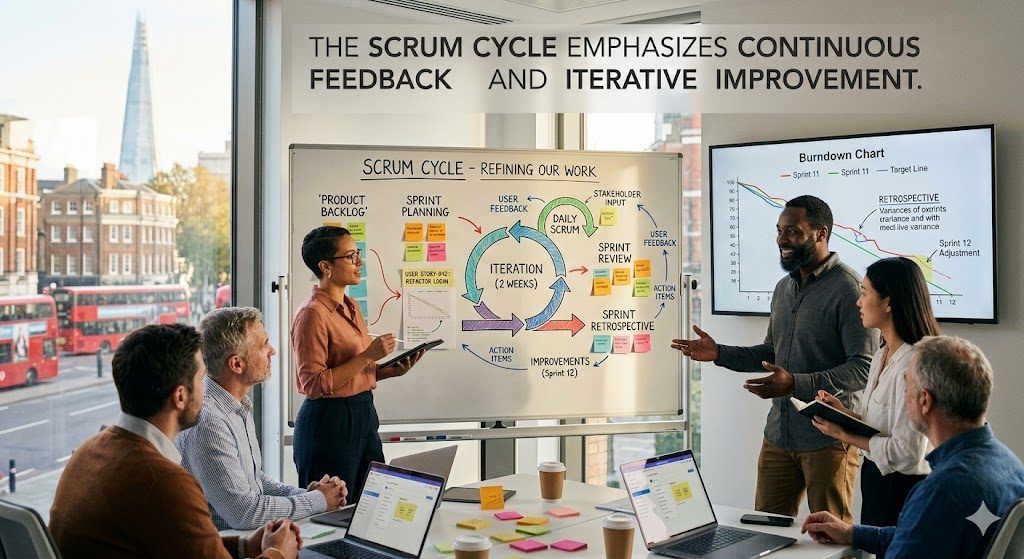
Figure 2: The Scrum cycle emphasizes continuous feedback and iterative improvement.
The Scrum Team – Who Does What?
A Scrum Team is a cohesive unit of professionals focused on one objective at a time: the Product Goal. It consists of three specific accountabilities:
The Product Owner (PO): The Voice of the Customer
The PO is responsible for maximizing the value of the product. This requires making tough decisions about what not to build. For example, an effective PO might say “No” to a stakeholder’s feature request by explaining how it diverges from the current strategic goal, offering to place it in the backlog for future consideration instead. This protects the team’s focus and ensures alignment with business objectives.
The Scrum Master (SM): The Servant Leader and Process Guardian
The SM is not a manager but a coach who helps the team understand and apply Scrum theory and practices. Their role is to remove impediments. Imagine a scenario where an external dependency blocks progress. A proactive SM might engage with the other department immediately, negotiating a resolution within 24 hours to keep the sprint on track.
The Developers: The Self-Organizing Engine
Developers are the creators of the Increment. They are self-managing, meaning they decide internally who does what, when, and how. For instance, if a team realizes mid-sprint that they have capacity, they might collectively decide to pull in an extra user story from the backlog, demonstrating ownership and adaptability.

Figure 3: Clear roles and mutual respect are essential for a high-performing Scrum team.
Part II: The Scrum Artifacts (The “Stuff” You Manage)
The Product Backlog – The Living Blueprint
The Product Backlog is an emergent, ordered list of what is needed to improve the product. It is never “complete.” A healthy backlog is DEEP: Detailed appropriately, Emergent, Estimated, and Prioritized.
Managing a monolithic epic can be overwhelming. The key is decomposition. For example, an epic like “Improve User Onboarding” can be split into actionable user stories such as “As a new user, I want to skip the tutorial so that I can explore the app immediately,” or “As a new user, I want to see progressive hints so that I learn features contextually.” This makes work manageable and estimable.
The Sprint Backlog – The Sprint Promise
The Sprint Backlog is the set of Product Backlog items selected for the Sprint, plus a plan for delivering them. It represents a forecast by the Developers, not a binding contract. However, it is guided by a commitment: the Sprint Goal.
Mid-sprint adjustments are normal. If a team discovers significant technical debt while working on a story, they might adjust their Sprint Backlog. They could swap out a lower-priority item to address the debt, ensuring the Sprint Goal remains achievable without compromising quality. This flexibility is a strength, not a weakness.
The Increment – The Definition of “Done”
The Increment is the concrete stepping stone toward the Product Goal. Each Increment must be additive to all prior Increments and thoroughly tested. The word “Done” is dangerous if not clearly defined.
There is a vast difference between “Dev Done” (code written and locally tested) and “Production Ready Done” (coded, tested, documented, and deployed to staging). A clear Definition of Done (DoD) prevents the accumulation of hidden work and ensures that every increment adds genuine value.

Figure 4: A clear Definition of Done ensures quality and reduces technical debt.
Part III: The Scrum Events (The Rhythm)
Sprint Planning – Setting Up for Success
Sprint Planning initiates the Sprint by laying out the work to be performed. It answers two questions: What can be delivered this Sprint? (led by the PO) and How will the chosen work get done? (led by the Developers).
Effective planning involves capacity planning. Instead of just looking at story points, teams should consider available hours, accounting for holidays, meetings, and support duties. For example, a team might realize that due to a company-wide event, their capacity is reduced by 20%, and they adjust their forecast accordingly, setting realistic expectations.
The Daily Standup – The 15-Minute Alignment
The Daily Scrum is a 15-minute event for the Developers to synchronize activities and create a plan for the next 24 hours. It is not a status report to the Scrum Master.
Moving beyond the rote “What did you do yesterday?” question, teams should focus on progress toward the Sprint Goal. Using the three questions effectively helps spot blockers early. For instance, a developer might say, “I’m stuck on the API integration because the documentation is outdated. I need help from the backend team today.” This immediate flagging allows for quick resolution.

Figue 5: The Daily Standup is a synchronization point, not a status report.
Sprint Review – The Demo (That Isn’t a Demo)
The Sprint Review is held to inspect the outcome of the Sprint and determine future adaptations. The goal is collaboration and feedback, not just showing off code.
This is where stakeholders can change the direction of the product. For example, during a review, a stakeholder might see a new feature and realize it solves a different problem than originally thought. They might suggest pivoting the next Sprint’s focus to leverage this unexpected benefit, demonstrating the agility of the process.
The Sprint Retrospective – The Engine of Improvement
The Sprint Retrospective is perhaps the most important event for long-term improvement. It focuses on people, relationships, processes, and tools. Psychological safety is paramount; team members must feel safe to admit mistakes and suggest changes.
Using exercises like “Start/Stop/Continue” can yield actionable insights. For instance, a team might identify that their testing process is broken. They agree to Start writing automated tests for critical paths, Stop skipping code reviews, and Continue their pair programming sessions. This leads to tangible process improvements.
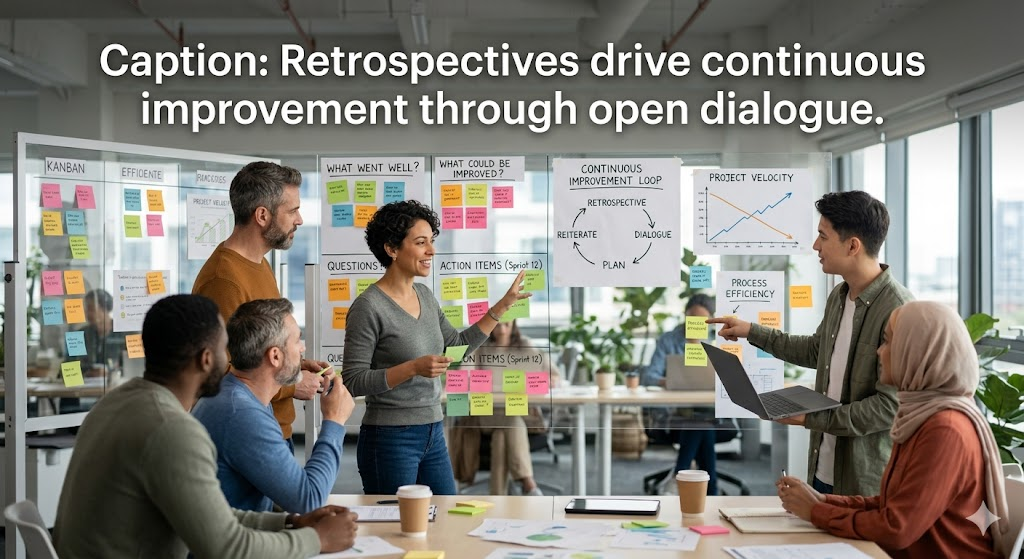
Figure 6: Retrospectives drive continuous improvement through open dialogue.
Part IV: Real-World Application (The “How”)
Estimation and Velocity
Teams use Story Points for relative estimation because humans are better at comparing complexity than predicting absolute time. Planning Poker is a common technique where team members discuss and vote on the complexity of a story until consensus is reached.
However, velocity is often misused. It is a planning tool to help the team forecast how much work they can handle in future sprints, not a performance metric to compare teams or judge individuals. Using velocity as a KPI leads to inflation of points and undermines trust.
The “Mature” Backlog (Refinement)
Backlog Refinement is the act of breaking down and further defining Product Backlog items. How much time should you spend on this? Typically, 5-10% of the team’s capacity.
Using the INVEST model helps create high-quality stories: Independent, Negotiable, Valuable, Estimable, Small, and Testable. For example, a story that depends on another team’s API is not Independent. Splitting it or creating a spike to investigate the API first can make it more manageable.
Handling Technical Debt
Technical debt is inevitable, but ignoring it is fatal. Mature teams dedicate a portion of each Sprint to addressing non-functional requirements and debt. For example, a team might agree to dedicate 20% of every Sprint to refactoring, updating libraries, or improving test coverage. This proactive approach prevents the “big bang” rewrite scenarios that plague many projects.

Figure 7: Regularly addressing technical debt ensures long-term product health.
Part V: Common Pitfalls and Anti-Patterns (What to Avoid)
“ScrumBut…”
“ScrumBut” refers to teams that claim to do Scrum but omit key elements. For example: “We do Scrum, but we have 4-week sprints and no Retrospective.” This is often called Zombie Scrum—the motions are there, but the life is gone. To fix this, teams must return to the basics: shorten sprints to get faster feedback and reinstate retrospectives to drive improvement.
The Overbearing Product Owner
An anti-pattern occurs when the PO dictates how the work should be done, ignoring the Developers’ expertise. For example, a PO insisting on a specific database schema or code structure. This undermines the self-organizing nature of the team. The PO should define the what and why, leaving the how to the Developers.
The Scrum Master as a Manager
Another common pitfall is the Scrum Master acting as a taskmaster. If the SM assigns tasks to individuals, they destroy self-management. The SM should facilitate the team’s own decision-making process, asking questions like “Who feels confident taking this on?” rather than saying “John, you do this.”

Figure 8: Avoiding anti-patterns requires vigilance and a commitment to Scrum values.
Part VI: Beyond the Framework (Advanced Topics)
Scaling Scrum
When multiple teams work on the same product, coordination becomes complex. Frameworks like LeSS (Large Scale Scrum) or Nexus provide structures for this. For example, coordinating three teams on the same Product Backlog requires a unified Product Owner and synchronized Sprint cycles. Regular Scrum of Scrums meetings can help align dependencies and share learnings across teams.
Integrating UX/Design with Scrum
Integrating design into Scrum can be challenging. A “Dual-Track” Agile process can help, where discovery (research and design) runs slightly ahead of delivery (development). For example, designers might work on prototypes for the next sprint’s features while developers build the current sprint’s items. This ensures that developers have well-researched, validated designs ready to implement, reducing rework.
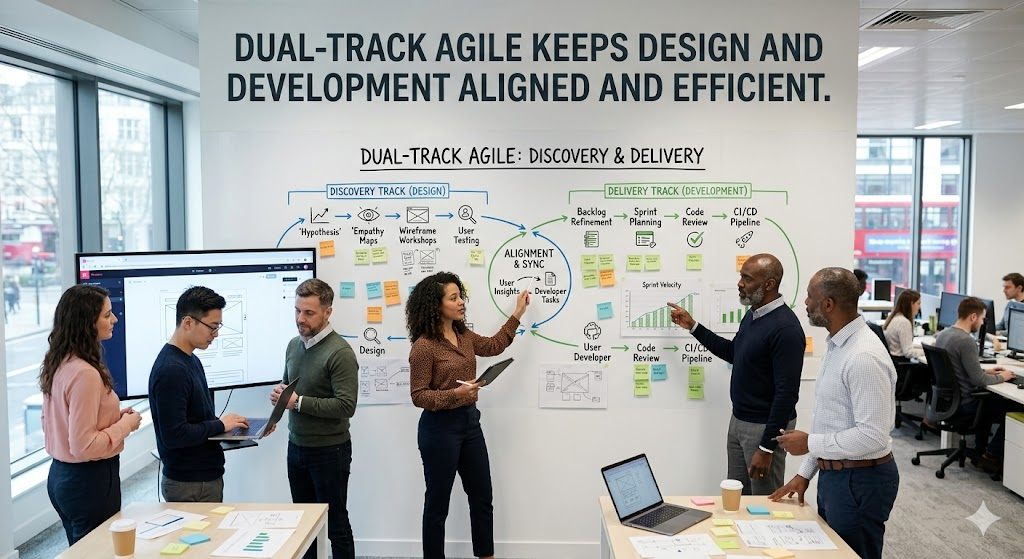
Figure 9: Dual-track Agile keeps design and development aligned and efficient.
Conclusion: The Journey, Not the Destination
Mastering Scrum is not about achieving a perfect state of compliance; it is about embracing a mindset of continuous learning and adaptation. The “Agile Mindset” reminds us that processes serve people, not the other way around.
As you embark on or continue your Scrum journey, remember that setbacks are opportunities for inspection and adaptation. Use the final checklist below to prepare for your next Sprint, but remain flexible enough to deviate when the situation demands it. True agility lies in the ability to respond to change while staying grounded in value delivery.
Final Checklist for Your Next Sprint:
-
Is the Sprint Goal clear and compelling?
-
Has the team committed to a realistic amount of work?
-
Are dependencies identified and mitigated?
-
Is the Definition of Done understood by everyone?
-
Is the retrospective scheduled and facilitated safely?
By focusing on these fundamentals and fostering a culture of trust and transparency, your team can move from being fragile to being truly Agile.
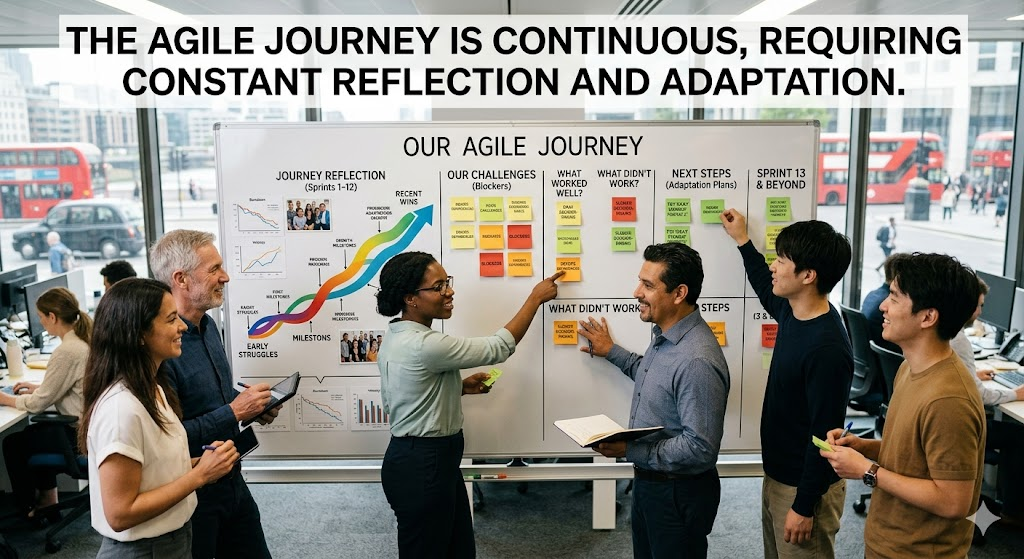
Figure 10: The Agile journey is continuous, requiring constant reflection and adaptation.
Appendix
A: Glossary of Key Terms
-
Artifact: Tangible by-products produced during the project.
-
Event: Formal opportunities to inspect and adapt.
-
Increment: The sum of all Product Backlog items completed during a Sprint.
-
Velocity: The amount of work a team can tackle during a single Sprint.
B: Template: Sprint Goal Check-in
-
Current Status: [On Track / At Risk / Off Track]
-
Blockers: [List any impediments]
-
Adjustments Needed: [Describe any changes to plan]
C: Template: Retrospective Icebreakers
-
“What was your highlight of the last Sprint?”
-
“If this Sprint were a movie, what would the title be?”
-
“One word to describe how you feel right now.”
Reference
- What is Agile and Scrum?: A comprehensive guide explaining the fundamental concepts of Agile methodology and the Scrum framework, detailing their roles in modern software development.
- How to Use Scrum Board for Agile Development: A practical tutorial on utilizing Scrum boards to visualize workflow, manage tasks, and enhance team collaboration during Agile sprints.
- Professional Agile Scrum Tools Now Available in Visual Paradigm Standard Edition: An announcement and overview of the integration of professional-grade Agile and Scrum management tools into the Standard Edition of Visual Paradigm.
- Best Free and Commercial Agile Tools: A comparative review of top-tier free and paid software solutions designed to support Agile project management and team efficiency.
- Agile Feature Management: An exploration of techniques and tools for managing features within an Agile environment, ensuring alignment with customer value and product goals.
- Top 1000 Agile Resources and Tools: An extensive collection or ranking of Agile resources, tools, and best practices for teams looking to scale their project management capabilities.
- Agile User Story Mapping Tool: Details on Visual Paradigm’s user story mapping feature, which helps teams visualize the user journey and prioritize backlog items effectively.
- User Story Mapping: Visualizing the Path to Customer Value: An insightful article discussing how user story mapping serves as a strategic tool to align development efforts with customer needs and deliver maximum value.
- Scrum Project Management: A blog post outlining the essentials of managing projects using Scrum, including roles, events, and artifacts for successful delivery.
- Product Backlog vs. Sprint Backlog: A clear distinction between the product backlog and sprint backlog, explaining how each functions within the Scrum framework to organize work.
- Understanding Agile User Story Cards: A Guide: A guide to creating and managing Agile user story cards, focusing on best practices for writing effective stories that drive development.
- Best Scrum Tools for Agile Teams: A curated list of recommended Scrum tools that help automate stand-ups, track progress, and improve communication within Agile teams.
- Agile User Story Mapping Tool: (Duplicate entry) Features and benefits of using Visual Paradigm’s dedicated tool for creating and managing user story maps in Agile projects.
- What is Scrum?: An introductory guide (in Chinese/English context) defining Scrum, its core principles, and how it facilitates iterative development.
- Agile Development Overview: A broad overview of Agile development practices, highlighting the benefits of iterative processes and continuous feedback loops.
- Mastering TOGAF ADM: A Comprehensive Guide: A detailed guide on the TOGAF Architecture Development Method (ADM), providing insights into enterprise architecture planning and execution.
- What is Agile Project Management?: An explanation of Agile project management principles, contrasting them with traditional waterfall methods and highlighting flexibility and customer collaboration.
- Agile Feature Tracking: (Traditional Chinese context) Information on tracking and managing features within Agile workflows to ensure timely delivery and quality assurance.
- From Small Teams to Scaling Agile: Strategies and frameworks for scaling Agile practices from small, single teams to large organizations, addressing challenges in coordination and consistency.