In the complex landscape of project management, adopting a new framework is rarely a one-time event. It is a transformation that requires sustained effort, clear direction, and measurable outcomes. Without specific metrics, organizations often struggle to determine if their investment in process improvement is yielding the desired results. This is where Key Performance Indicators (KPIs) become essential. They provide the data needed to navigate change, ensure alignment with strategic goals, and validate the effectiveness of the new workflow.
Defining KPIs for framework implementation success is not about collecting numbers for the sake of reporting. It is about understanding the health of the adoption process itself. Whether transitioning from a predictive model to an adaptive approach or standardizing practices across departments, the metrics you choose dictate what you value and what you improve.
🔍 Understanding the Scope of Implementation Metrics
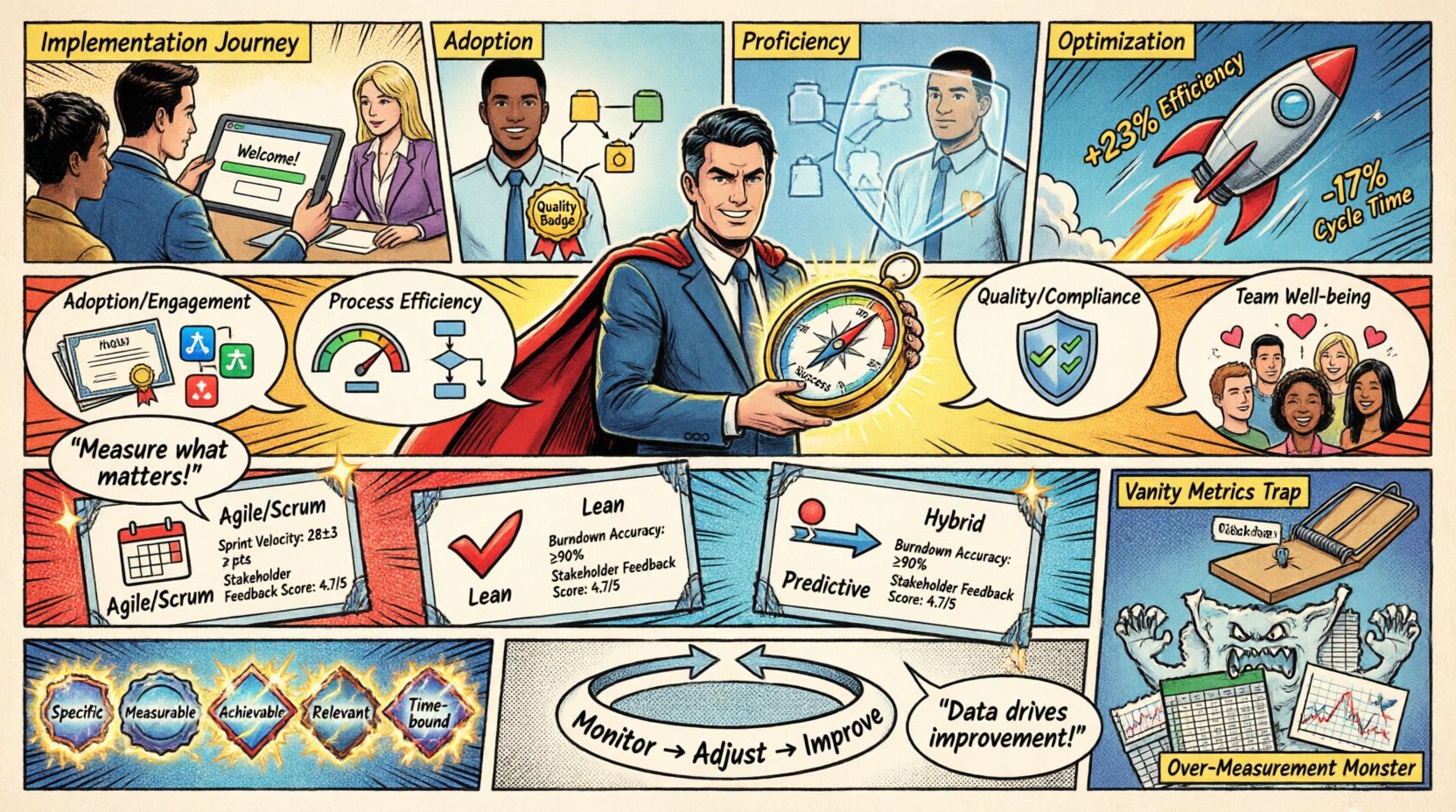
Before selecting specific indicators, it is vital to understand the lifecycle of framework adoption. Implementation is not immediate; it follows a trajectory from initial awareness to full integration. During this journey, different stages require different types of measurement.
- Adoption Phase: Focuses on usage rates and participation.
- Proficiency Phase: Measures the quality of output and adherence to standards.
- Optimization Phase: Evaluates efficiency gains and value delivery.
By categorizing metrics into these phases, project leaders can avoid premature judgment. A team might not be delivering faster immediately after switching frameworks, but their communication might be significantly clearer. Recognizing these nuances prevents the abandonment of a process before it matures.
📉 Categories of Essential KPIs
To gain a holistic view of implementation success, metrics should be drawn from multiple dimensions. Relying on a single data point can lead to skewed perceptions of performance. The following categories provide a balanced approach to tracking progress.
1. Adoption and Engagement
These indicators measure how well the team is utilizing the new framework. High adoption does not always mean high success, but low adoption guarantees failure. Key areas to monitor include:
- Training Completion Rates: What percentage of the team has finished the required onboarding?
- Tool Usage Frequency: How often are new processes being invoked in daily tasks?
- Stakeholder Participation: Are reviews and planning sessions being attended as scheduled?
2. Process Efficiency
Once the team is using the framework, the next question is whether it is working better than the previous state. This involves tracking speed and flow.
- Lead Time: The total time from request to delivery.
- Cycle Time: The time spent actively working on a task.
- Throughput: The number of items completed within a specific timeframe.
- Bottleneck Identification: Where does work tend to pile up?
3. Quality and Compliance
Speed is irrelevant if the output is flawed. These metrics ensure that the framework is delivering value without introducing technical debt or compliance risks.
- Defect Rate: The number of errors found post-delivery.
- Rework Percentage: How much work must be redone due to initial errors.
- Standards Adherence: The rate at which deliverables meet defined quality gates.
4. Team Well-being and Satisfaction
Change management often impacts morale. If a new framework causes burnout or confusion, long-term success is unlikely. Human-centric metrics are just as critical as data-driven ones.
- Sprint Retrospective Feedback: Qualitative data from team members regarding process friction.
- Workload Balance: Monitoring for spikes in overtime or resource contention.
- Retention Rates: Are team members staying engaged or leaving?
📊 Example KPIs for Different Framework Types
While general categories apply broadly, specific frameworks often require tailored indicators. The table below illustrates how metrics might shift depending on the methodology being implemented.
| Framework Type | Primary Focus | Example KPI | Target Metric |
|---|---|---|---|
| Agile / Scrum | Velocity & Flow | Sprint Burndown | Consistent completion of planned stories |
| Lean | Waste Reduction | Value Stream Mapping | Reduction in non-value-added time |
| Predictive (Waterfall) | Schedule & Budget | Variance Analysis | Within 5% of baseline schedule |
| Hybrid | Flexibility & Control | Change Request Rate | Stabilized after initial stabilization period |
Notice that the target metric varies. For Agile, consistency in velocity is often more valuable than raw speed. For Predictive models, sticking to the baseline is the primary definition of success. Selecting the wrong target for the wrong methodology can demotivate teams and obscure true performance.
🛠 Setting SMART Goals for Implementation
Defining a KPI is not enough; it must be actionable. A common mistake is setting vague goals like “improve communication.” To make KPIs effective, they should adhere to the SMART criteria: Specific, Measurable, Achievable, Relevant, and Time-bound.
- Specific: Instead of “better quality,” use “reduce post-release bugs by 10%.”
- Measurable: Ensure there is a clear method for data collection.
- Achievable: Set targets that stretch the team without causing burnout.
- Relevant: The metric must align with the broader organizational strategy.
- Time-bound: Define a review period, such as “within Q3.”
When setting these goals, involve the team in the process. Those executing the work often have the best insight into what is realistic. This collaborative approach fosters ownership and reduces resistance to the new framework.
⚠️ Common Pitfalls in KPI Definition
Even with the best intentions, defining metrics can go awry. Awareness of common traps helps avoid misinterpretation of data and ensures the framework serves the team rather than the other way around.
- Vanity Metrics: Tracking numbers that look good but do not reflect value, such as the number of meetings held instead of decisions made.
- Over-Measurement: Collecting too much data can overwhelm stakeholders and obscure the signal.
- Lagging Indicators Only: Focusing only on results (e.g., final revenue) rather than leading indicators (e.g., active development progress) makes it impossible to course-correct.
- Ignoring Context: Comparing metrics across teams without accounting for project complexity or resource availability.
- Static Targets: Failing to adjust KPIs as the project matures. A metric valid for launch may not be relevant for maintenance.
🔄 Monitoring and Adjusting the Metrics
The definition of success is not static. As the framework becomes embedded in the culture, the metrics used to measure it should evolve. This requires a regular review cycle, often aligned with quarterly planning or major milestone reviews.
During these reviews, ask critical questions:
- Are these metrics still driving the behavior we want to see?
- Is the data collection process adding unnecessary overhead?
- Have external factors changed the baseline for success?
- Are we measuring the right thing, or just what is easy to measure?
Be prepared to retire indicators that no longer provide value. Removing a metric is as important as adding one, as it frees up cognitive space for the team to focus on what truly matters.
🗣 Communicating Results to Stakeholders
Finally, the data must be communicated effectively. Technical teams may want detailed charts, while executives often prefer high-level summaries. Tailoring the presentation of KPIs ensures that the right people get the insights they need to make decisions.
- Visual Dashboards: Use clear visualizations to show trends over time.
- Narrative Context: Always pair data with a brief explanation of what happened and why.
- Highlight Wins and Losses: Be transparent about challenges. Hiding negative data erodes trust.
- Actionable Insights: Conclude reports with recommended next steps based on the data.
When stakeholders see that the KPIs are used to drive positive change rather than assign blame, resistance to the framework diminishes. The focus shifts from “who failed” to “how can we improve the process.”
🚀 Building a Culture of Continuous Improvement
Ultimately, the goal of defining KPIs for framework implementation is not just to prove success, but to enable it. A robust measurement strategy creates a feedback loop where data informs action, and action informs data.
By selecting the right indicators, avoiding common pitfalls, and maintaining a flexible approach, organizations can ensure that their project management frameworks deliver real value. The metrics should act as a compass, guiding the team through uncertainty and towards consistent, high-quality delivery. When implemented with care and authority, these indicators become the foundation of a mature, resilient project management ecosystem.
The journey of implementation is ongoing. As the organization grows, the definitions of success will shift. Keeping the focus on meaningful measurement ensures that the framework remains a tool for empowerment rather than a constraint on creativity.