The landscape of project management is shifting beneath our feet. Organizations today face volatility and complexity at a pace that renders static plans obsolete almost as soon as they are written. To survive and thrive, leaders must move beyond rigid adherence to traditional methodologies. The focus now rests on building a delivery strategy capable of withstanding change, absorbing shocks, and continuing to deliver value. This guide outlines the essential components of a resilient project framework.
Why Static Plans Fail in Dynamic Markets 📉
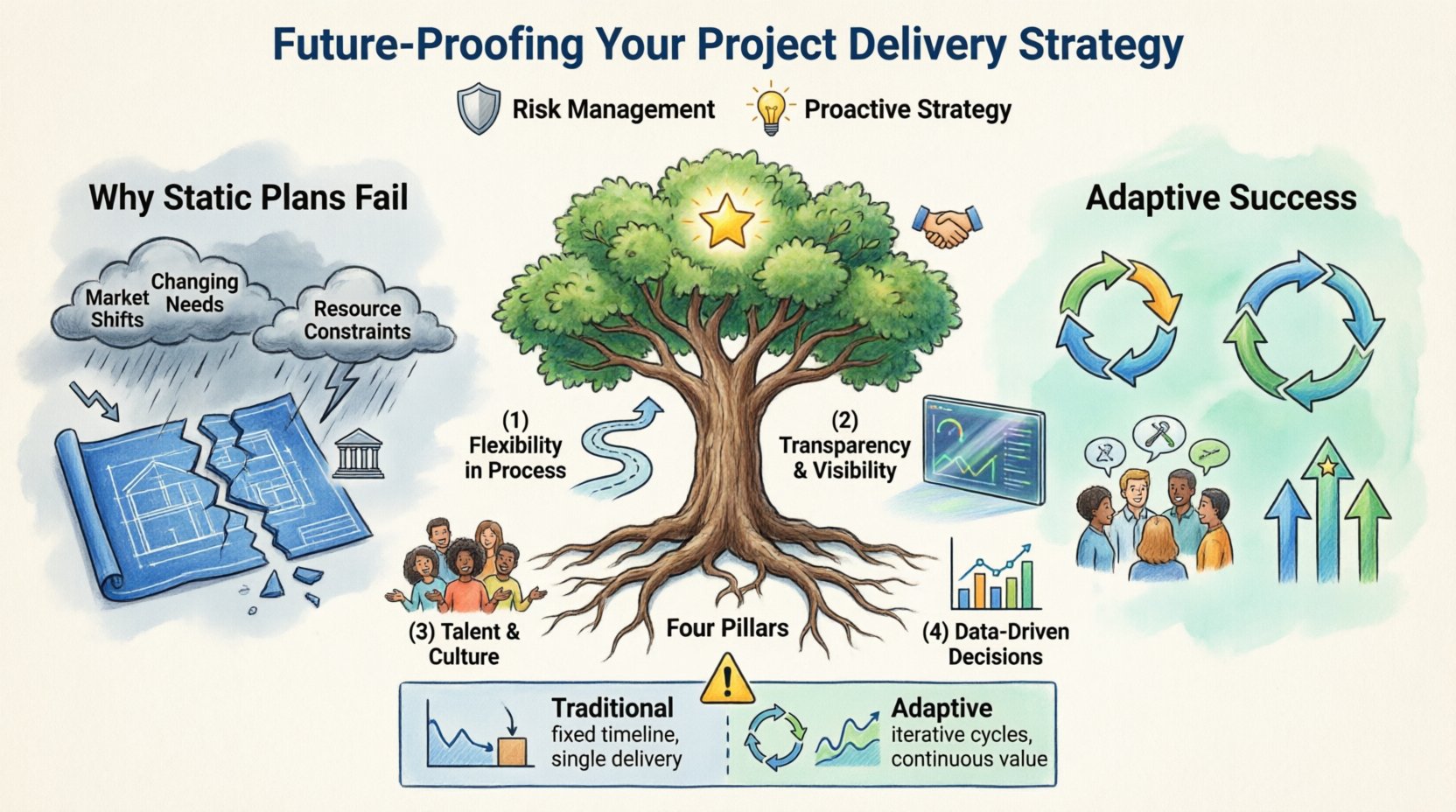
Traditional project delivery often relies on a linear progression of phases. While this approach offered stability in predictable environments, it struggles when requirements shift mid-stream. When market conditions change, customer needs evolve, or external factors intervene, a rigid plan becomes a liability rather than an asset. Leaders must recognize that the goal is not to stick to the original blueprint, but to ensure the final outcome remains valuable.
Consider the following reasons why fixed strategies falter:
- Unforeseen External Shifts: Economic fluctuations, regulatory changes, or supply chain disruptions can derail even the most carefully constructed schedules.
- Changing Stakeholder Needs: End-users often clarify their requirements as they see early deliverables, rendering initial specifications inaccurate.
- Resource Constraints: Personnel turnover or budget cuts force adjustments that a linear model cannot easily accommodate.
- Technological Obsolescence: Tools and standards evolve rapidly, making long-term technical decisions risky.
Adopting a future-proof approach means accepting uncertainty as a constant. It requires building systems that allow for iteration without compromising governance or quality standards.
The Four Pillars of Adaptive Delivery 🏛️
To construct a strategy that endures, you must anchor it in four fundamental pillars. These elements work together to create a structure that is both strong and flexible. Neglecting any one of these areas creates a vulnerability that can compromise the entire project lifecycle.
1. Flexibility in Process
Processes should serve the project, not the other way around. A rigid workflow forces the team to adapt to the plan rather than the plan adapting to reality. This does not mean abandoning structure; it means designing processes that have built-in checkpoints for adjustment.
- Define clear decision gates where course corrections are expected and authorized.
- Allow teams to choose the most effective techniques for specific tasks within the broader framework.
- Implement feedback loops that occur frequently, ensuring issues are caught early.
2. Transparency and Visibility
Stakeholders need to see the current state of the project without navigating layers of bureaucracy. Opacity breeds mistrust and delays decision-making. When everyone has access to the same data, the organization can respond faster to emerging threats or opportunities.
- Ensure metrics are visible to all relevant parties, not just senior leadership.
- Maintain a single source of truth for project status to avoid conflicting reports.
- Encourage open communication channels where bad news is reported immediately rather than hidden.
3. Talent and Culture
Technology and processes are useless without skilled people who understand the vision. A resilient strategy depends on a workforce that is empowered to solve problems and empowered to make decisions. This requires a culture that values psychological safety and continuous learning.
- Invest in training that focuses on adaptability and critical thinking.
- Create cross-functional teams to break down silos and foster collaboration.
- Recognize and reward proactive problem-solving rather than just adherence to schedules.
4. Data-Driven Decision Making
Intuition has its place, but strategy requires evidence. Relying on gut feelings during volatile periods leads to inconsistent outcomes. Establishing a data culture ensures that changes to the delivery strategy are based on trends and performance indicators.
- Track leading indicators that predict future performance, not just lagging indicators that report past failures.
- Use historical data to forecast risks more accurately.
- Regularly audit the effectiveness of current processes against actual output.
Methodologies and Frameworks 🔧
Selecting the right approach is critical. While Agile and Waterfall are often discussed, the reality is that most projects benefit from a hybrid or tailored model. The key is matching the methodology to the nature of the work and the level of uncertainty involved.
The following table illustrates the differences between traditional and adaptive approaches:
| Feature | Traditional (Predictive) | Adaptive (Agile) |
|---|---|---|
| Planning Horizon | Fixed at the start | Iterative and rolling |
| Scope | Fixed, changes are costly | Flexible, scope evolves |
| Risk Management | Identified upfront | Continuous monitoring |
| Delivery | Single release at end | Incremental value delivery |
| Customer Involvement | Beginning and end | Continuous collaboration |
When choosing a framework, avoid dogmatic adherence. A software development team might require a different cadence than a construction team. The goal is to maximize value flow while minimizing waste. Consider the following factors:
- Regulatory Requirements: Some industries demand strict documentation and sign-offs, which favors a more predictive element.
- Team Experience: Teams new to adaptive practices may need more structure initially.
- Stakeholder Expectations: Understand how involved stakeholders want to be in the daily grind versus high-level milestones.
Cultivating a Resilient Team Culture 🤝
Strategy is executed by people. If the team culture is brittle, the strategy will break under pressure. Resilience is not just about the plan; it is about the mindset of the individuals working within it. A culture of resilience prioritizes recovery and learning over perfection.
To build this culture, leaders must:
- Normalize Failure: Treat setbacks as data points for improvement. Conduct blameless post-mortems to identify systemic issues rather than individual errors.
- Encourage Autonomy: Trust teams to manage their own work. Micromanagement stifles the ability to pivot quickly when conditions change.
- Prioritize Well-being: Burnout destroys resilience. Sustainable pacing ensures the team remains effective over the long term.
- Foster Collaboration: Break down departmental barriers. When finance, engineering, and operations speak the same language, friction decreases.
Managing Risk Before It Strikes ⚠️
Many organizations react to risks only after they occur. Future-proofing requires a proactive stance. You must anticipate what could go wrong and have contingency plans in place before the threat materializes. This is not about paranoia; it is about preparedness.
Effective risk management involves:
- Identification: Regularly scan the internal and external environment for potential threats. Use techniques like pre-mortems to imagine how a project could fail.
- Assessment: Evaluate the probability and impact of each risk. Not all risks require immediate action.
- Mitigation: Develop strategies to reduce probability or impact. This might include diversifying suppliers or creating backup plans.
- Monitoring: Risks change. A risk that was low probability last month might be high probability this month. Continuous monitoring is essential.
Final Considerations for Long-Term Success 🌟
Building a future-proof project delivery strategy is an ongoing journey, not a destination. It requires constant evaluation and adjustment. The market will continue to change, and your strategy must evolve alongside it. By focusing on flexibility, transparency, talent, and data, you create an organization that can withstand uncertainty.
Remember that technology is a tool, not a strategy. The core of delivery success lies in how you organize people and processes to respond to change. Start by auditing your current approach against these pillars. Identify the gaps. Implement changes incrementally. Measure the impact. Over time, these adjustments will compound into a robust capability that delivers value consistently.
Do not wait for a crisis to force change. Use periods of stability to build the capacity for volatility. The organizations that succeed in the future will be those that view change as an opportunity rather than a threat. Build your strategy with this mindset, and you will secure a sustainable path forward.