Choosing the appropriate structure for managing work is one of the most critical decisions a team leader or organization can make. The wrong approach can lead to missed deadlines, budget overruns, and team burnout. Conversely, the right framework provides clarity, efficiency, and a predictable path to delivery. This guide explores the essential factors involved in selecting a project management methodology that aligns with your specific operational goals.
🧠 Understanding Core Frameworks
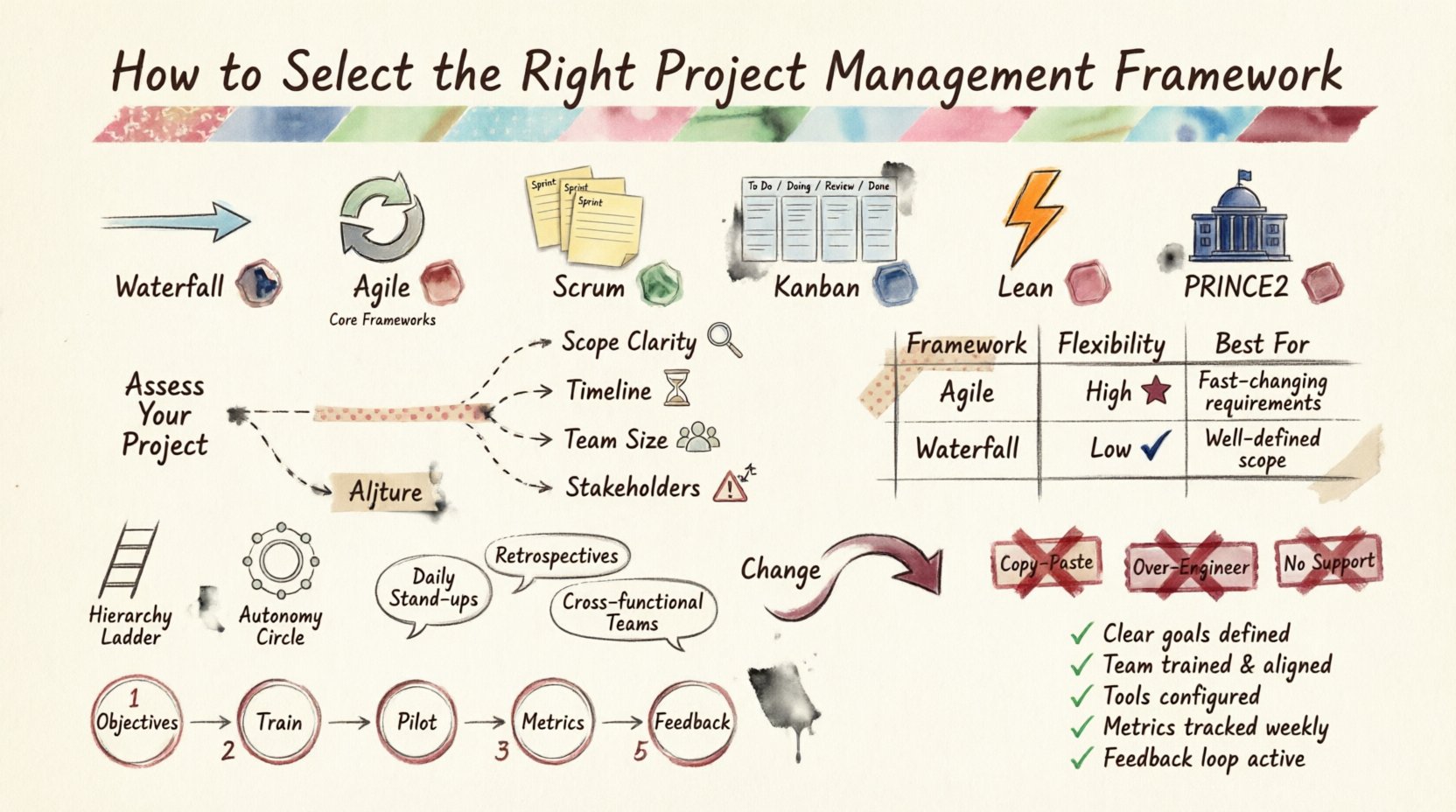
Before making a selection, it is necessary to understand the distinct characteristics of the most common frameworks available. Each methodology offers a different approach to planning, execution, and monitoring.
- Waterfall: A linear approach where phases are completed sequentially. Requirements are defined upfront, and changes are minimized once the project begins. This is often preferred for construction or manufacturing.
- Agile: An iterative approach that focuses on flexibility and customer feedback. Work is broken into small increments, allowing for adjustments throughout the lifecycle.
- Scrum: A specific type of Agile framework that uses fixed-length sprints to deliver work. Roles like Scrum Master and Product Owner define responsibilities.
- Kanban: A visual system for managing work as it moves through a process. It emphasizes continuous delivery without overloading the team.
- Lean: Focuses on maximizing value while minimizing waste. It prioritizes efficiency and streamlining processes.
- PRINCE2: A process-driven method common in government and European markets. It emphasizes strict control and defined stages.
Understanding these distinctions is the first step. The goal is not to pick the “best” one, but the one that fits the context of your specific project environment.
📋 Assessing Your Project Requirements
Not every project is created equal. Some require rigid adherence to a plan, while others thrive on adaptability. To select the right framework, evaluate the following dimensions of your project:
- Clarity of Scope: Do you know exactly what needs to be built from day one? If yes, a predictive model like Waterfall may suffice. If requirements are evolving, an adaptive model is better.
- Timeline Constraints: Are there fixed deadlines that cannot move? Waterfall handles fixed dates well. Agile handles fixed timeboxes (sprints) well, but scope may vary.
- Team Size: Smaller teams often find Scrum easier to manage due to frequent communication. Large enterprises may require the structure of PRINCE2 to maintain coordination.
- Stakeholder Involvement: How often do clients need to see progress? Agile allows for frequent demos. Waterfall typically involves stakeholders at the beginning and end.
- Risk Tolerance: High-risk projects often benefit from iterative testing to catch issues early. Low-risk projects with clear outcomes can follow a linear path.
⚖️ Comparing Methodologies
The table below provides a high-level comparison to help visualize the trade-offs between different approaches.
| Framework | Best For | Flexibility | Documentation Level | Customer Feedback |
|---|---|---|---|---|
| Waterfall | Construction, Manufacturing | Low | High | Low (End of Phase) |
| Agile | Software, Product Development | High | Medium | High (Continuous) |
| Scrum | Complex Product Teams | High | Medium | High (Sprint Reviews) |
| Kanban | Maintenance, Support | Medium | Low | Medium (Flow-based) |
| Lean | Process Optimization | Medium | Medium | Medium |
| Hybrid | Regulated Industries | Medium | High | Medium |
🏢 Aligning with Organizational Culture
A framework is not just a set of rules; it is a cultural agreement. Introducing a framework that conflicts with how your team naturally works will lead to resistance.
1. Hierarchy vs. Autonomy
- If your organization relies on strict hierarchy and command-and-control, a Waterfall or PRINCE2 approach will feel familiar.
- If your team values autonomy and self-organization, Scrum or Kanban will be more effective.
2. Communication Style
- Some teams prefer formal status reports and documentation. Others prefer daily stand-ups and verbal updates.
- Ensure the chosen framework matches the communication habits of your stakeholders.
3. Change Management
- Is change viewed as a failure or an opportunity? In rigid environments, change requests are often rejected. In adaptive environments, they are welcomed.
- Select a framework that validates your organization’s stance on change.
🚀 Steps to Implementation
Once you have identified a potential framework, follow these steps to implement it successfully.
- Define Objectives: Clearly state what success looks like for the project. Is it speed? Quality? Cost control?
- Train the Team: Do not assume everyone understands the new methodology. Provide training on roles, ceremonies, and artifacts.
- Pilot the Framework: Run a small pilot project before rolling it out across the entire organization. This allows you to identify friction points.
- Establish Metrics: Decide how you will measure performance. Common metrics include cycle time, velocity, and defect rates.
- Gather Feedback: After the first few cycles, ask the team what is working and what is not. Be prepared to adjust.
⚠️ Common Selection Pitfalls
Many organizations make the mistake of adopting a framework simply because it is popular. Avoid these common errors:
- Copy-Pasting: Just because a company succeeded with a specific method does not mean it will work for you. Context matters.
- Ignoring Hybrid Needs: Sometimes a pure Agile or pure Waterfall approach is insufficient. A hybrid model might be necessary to satisfy compliance while maintaining speed.
- Over-Engineering: Do not create excessive documentation or meetings. The framework should serve the project, not burden it.
- Lack of Leadership Support: If leadership does not understand the framework, they will undermine the process during conflicts.
🔍 Final Evaluation Criteria
Before finalizing your decision, run your project through this checklist.
- Does the framework allow us to meet our regulatory requirements?
- Will the team understand their roles within this structure?
- Can we measure progress accurately using this method?
- Does it support the frequency of delivery required by the market?
- Is the overhead of the framework proportional to the project size?
Selection is an active process. It requires honest assessment of your current capabilities and future goals. By focusing on fit rather than trends, you establish a foundation for consistent delivery and long-term operational health.
📈 Moving Forward
The landscape of work is constantly shifting. A framework that works today may need adjustment in six months. Maintain a mindset of continuous improvement. Review your chosen methodology periodically. If the project environment changes, be willing to pivot to a different structure. The value lies in the successful delivery of outcomes, not in the rigid adherence to a specific set of rules.
Take the time to analyze your needs. Engage your team in the decision-making process. When the structure supports the work, the results follow naturally.