


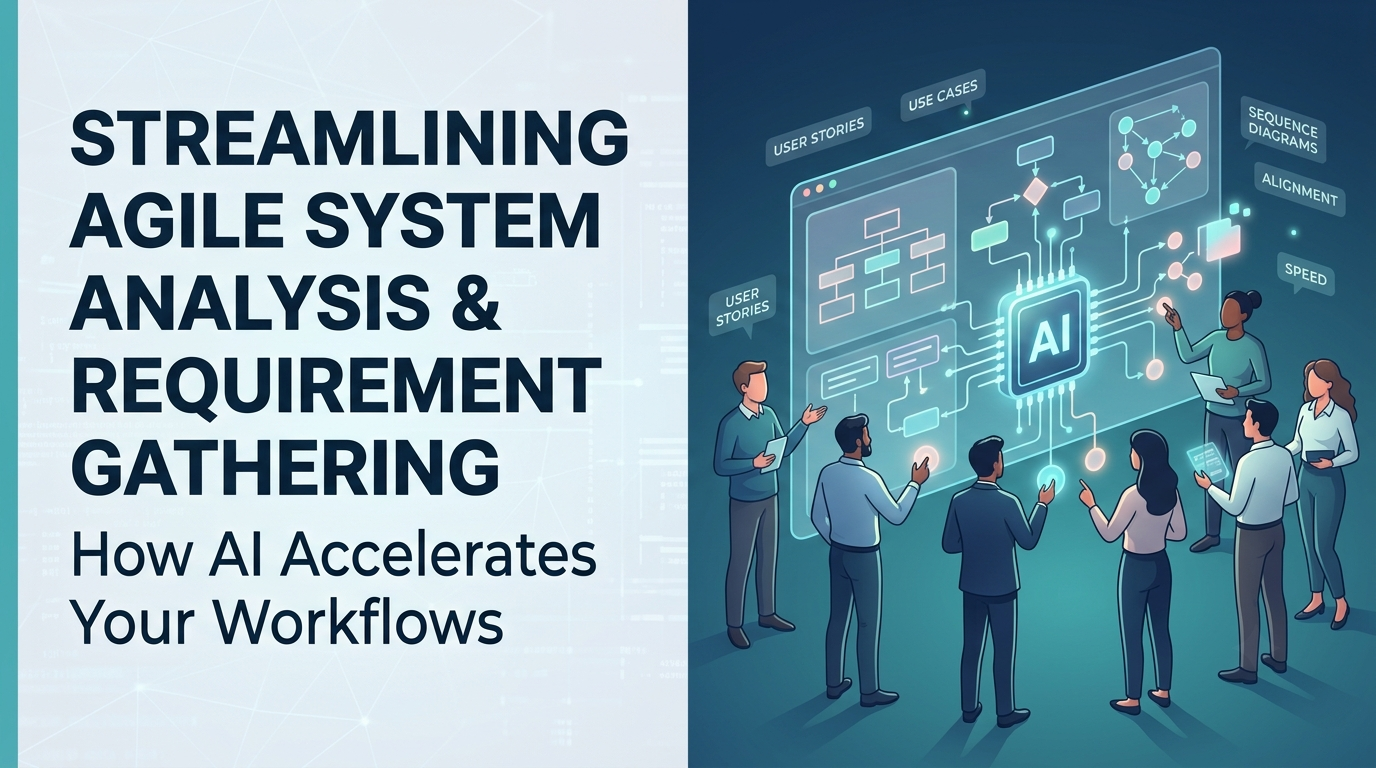
Agile software development thrives on speed, iteration, and adaptability. However, one of the persistent bottlenecks in Agile frameworks—such as Scrum or Kanban—is the gap between requirement gathering and technical execution. Product Managers, Business Analysts, and Scrum Masters often spend hours translating user stories into clear technical requirements, while developers struggle to interpret unformatted text during sprint planning.
Traditional requirement analysis relies heavily on manual documentation and static diagrams created on digital whiteboards. Today, artificial intelligence is reshaping this phase. By converting natural language user stories directly into visual system models, AI is accelerating requirement analysis and keeping Agile teams perfectly aligned.
The Challenge of Traditional Requirement Analysis in Agile
In fast-paced sprint cycles, technical documentation is often treated as a secondary priority. This leads to common project pitfalls:
- Misinterpreted User Stories: Text-only user stories can be ambiguous, leading developers to make assumptions that result in rework.
- Time-Consuming Grooming Sessions: Backlog grooming sessions frequently stall when teams debate complex workflows without a visual model to guide the conversation.
- Documentation Drift: As user stories evolve across sprints, early architecture sketches quickly become outdated.
How AI Transforms Requirement Gathering
AI-powered modeling tools bridge the gap between business requirements and software architecture. Rather than treating requirements and visual models as separate deliverables, AI integrates them into a continuous workflow.
1. Instant Translation of User Stories into Visual Use Cases
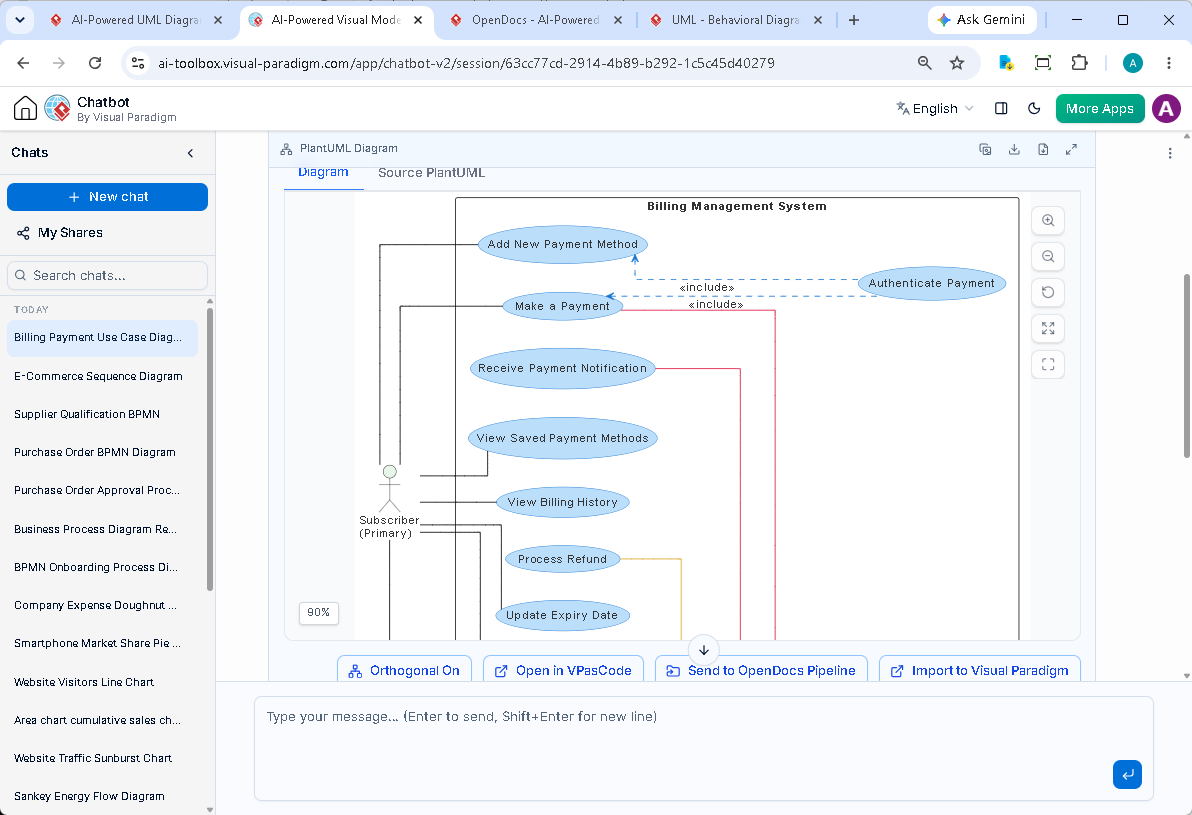
When a Product Owner drafts a user story (e.g., “As a subscriber, I want to manage my billing payment methods so that I can prevent service interruptions”), an AI tool can analyze the text and generate a complete Use Case Diagram. The AI identifies actors, boundaries, and primary workflows automatically.
2. Generating Sequence & Activity Workflows for Sprint Planning
During sprint backlog grooming, development teams need to understand step-by-step logic. AI can take a feature description and immediately produce a detailed Activity Diagram or Sequence Diagram. This brings edge cases, error-handling paths, and missing API dependencies to light before developers write a single line of code.
Product managers and engineering leads can turn unformatted feature specifications into actionable workflows by leveraging an interactive AI UML generator during team grooming sessions.
3. Conversational Refinement During Backlog Grooming
Instead of manually editing shapes during a meeting, teams can refine diagrams using conversational AI prompts. If a developer asks, “What happens if the third-party payment gateway times out?”, the team can prompt the AI assistant to add an alternative handling branch to the active sequence model in seconds.
Key Benefits for Agile Teams
| Agile Role | Traditional Workflow | AI-Assisted Workflow |
|---|---|---|
| Product Owner / BA | Manually writes long text specs and sketches static flowcharts. | Prompts AI to generate initial workflows and use cases from epic summaries. |
| Scrum Master / Agile Coach | Spends time resolving requirement misunderstandings across teams. | Uses clear, AI-derived visual diagrams to align business and engineering stakeholders. |
| Software Architect / Lead Dev | Spends hours building formal UML models before sprint execution. | Reviews and refines AI-generated models, focusing energy on technical architecture. |
Best Practices for Implementing AI in Agile Workflows
- Integrate AI into Grooming Meetings: Use AI diagram generators live during backlog grooming to visualize stories collaboratively.
- Standardize Prompt Templates: Establish consistent prompt formats for user stories so the AI reliably extracts actors, actions, and conditional logic.
- Connect Models to Work Items: Ensure AI-generated diagrams are embedded into your backlog management tools (such as Jira or Azure DevOps) for easy developer reference.
Conclusion
AI is changing requirement gathering from a slow, text-heavy manual process into an interactive, visual workflow. By incorporating AI-driven diagramming into Agile system analysis, development teams can eliminate ambiguity, speed up sprint planning, and build better software faster.