
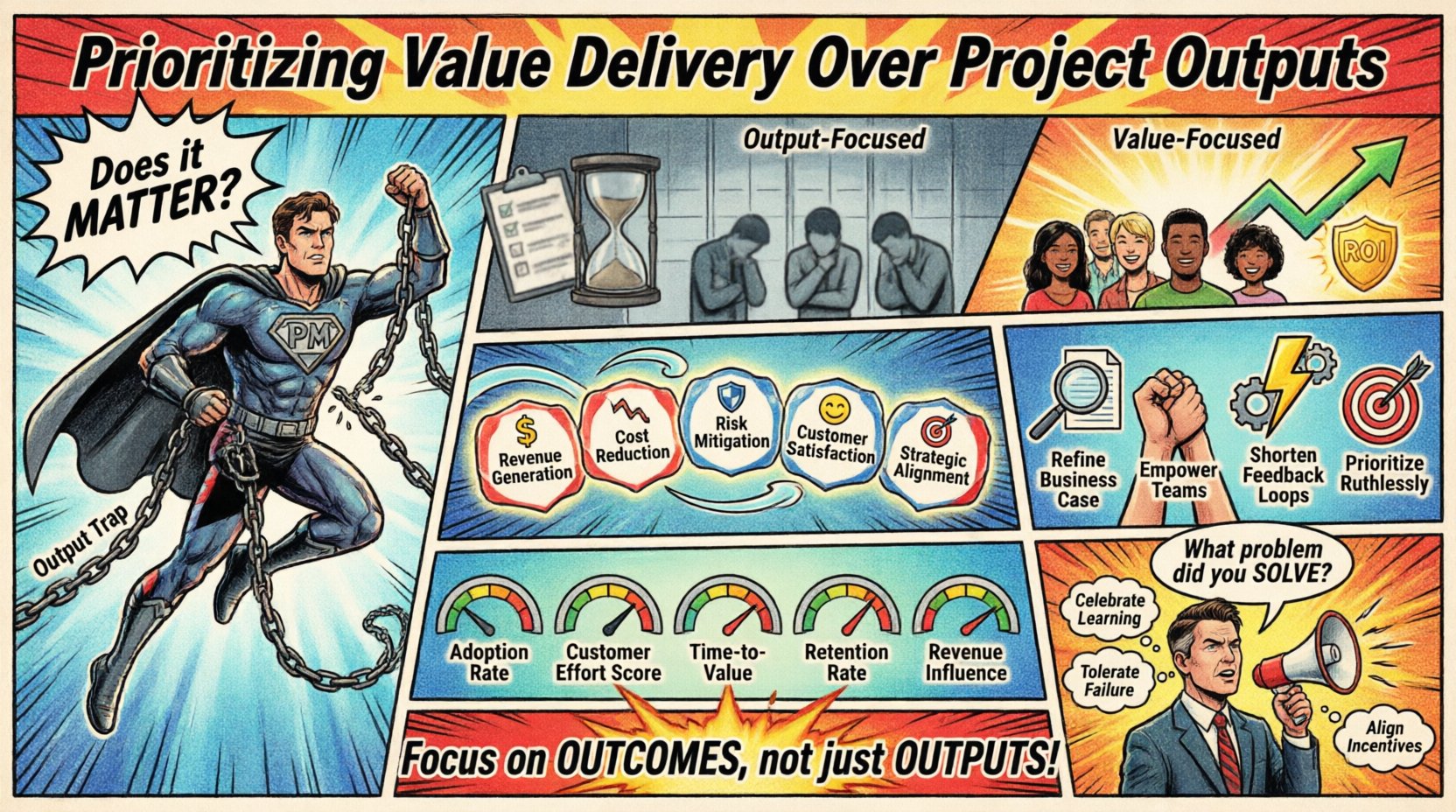
In the fast-paced world of project management, there is a persistent trap that teams fall into repeatedly. It is the belief that shipping features, completing tasks, and hitting milestones equates to success. This mindset focuses heavily on project outputs—the tangible artifacts produced—rather than the value delivery these artifacts generate for the business or the customer. While outputs are necessary components of execution, they are not the end goal. The true measure of a project’s worth lies in the outcomes it achieves.
This shift in perspective requires a fundamental change in how teams plan, execute, and measure work. It demands that leaders and contributors ask not just “Did we build it?” but “Does it matter?” Moving away from a purely output-driven approach allows organizations to reduce waste, increase ROI, and align efforts with strategic objectives. This guide explores the mechanics of value-driven management and how to implement it effectively without relying on specific tools or methodologies.
🛑 The Output Trap: Why “Done” Isn’t Enough
Many organizations celebrate the completion of a project phase with a sense of victory. A feature is deployed, a report is published, or a product launch occurs. If the schedule was met and the budget was adhered to, the project is deemed successful. However, if the feature is not adopted, the report is ignored, or the launch fails to gain traction, the output has not translated into value.
This disconnect often stems from:
- Focus on Activity: Teams measure productivity by hours logged or tickets closed rather than problems solved.
- Rigid Planning: Plans are created to satisfy stakeholders’ initial requests without validating the underlying need.
- Lack of Feedback: There is no mechanism to verify if the delivered work is actually used or beneficial after handover.
- Scope Creep: Adding features to a project to justify its existence rather than to enhance its value.
When the focus remains on outputs, teams risk building solutions that nobody wants. This leads to technical debt, maintenance costs, and wasted resources. The goal is to ensure that every unit of effort expended contributes to a tangible benefit.
💎 Defining Value Delivery in Project Management
Value delivery is the continuous process of ensuring that project outcomes meet the strategic needs of the organization and its stakeholders. It is not a one-time event at the end of a lifecycle but a constant evaluation throughout the project’s duration. Value can be financial, operational, or experiential.
Key dimensions of value include:
- Revenue Generation: Does the work directly increase income or open new market opportunities?
- Cost Reduction: Does the output streamline processes and lower operational expenses?
- Risk Mitigation: Does the work prevent potential future losses or compliance issues?
- Customer Satisfaction: Does the output improve the user experience or solve a pain point?
- Strategic Alignment: Does the work support the long-term vision of the organization?
To prioritize value, project managers must engage in continuous discovery. This involves talking to users, analyzing market trends, and constantly questioning the business case behind every task. If a task does not clearly link to one of these dimensions, it warrants re-evaluation.
📊 Output vs. Value: A Comparison
Understanding the distinction between output and value is critical for shifting focus. The table below highlights the differences in mindset, metrics, and outcomes.
| Aspect | Output-Focused | Value-Focused |
|---|---|---|
| Primary Goal | Finish the task on time | Realize a business benefit |
| Success Metric | Percentage of tasks completed | Adoption rates, ROI, retention |
| Stakeholder View | “We got what we asked for” | “We achieved our business goal” |
| Response to Change | Resistance; deviation from plan | Adaptation; optimization for value |
| Team Motivation | Closing tickets | Solving problems |
As shown, the value-focused approach requires more flexibility and engagement. It accepts that the plan may change if the data suggests a better path to value exists.
🔄 Strategies to Shift Focus
Transitioning from an output culture to a value culture requires deliberate actions. It is not enough to simply state the new goal; the processes must reflect it.
1. Refine the Business Case
Every initiative should have a clear hypothesis. Before starting work, define what success looks like in terms of value. If you cannot articulate the expected benefit, the project may not be worth the investment. Revisit this hypothesis regularly. If market conditions change, the hypothesis might become invalid, necessitating a pivot or cancellation.
2. Empower Teams to Decide
Teams closest to the work often have the best insights into value. Instead of micromanaging tasks, empower teams to decide how to achieve the desired outcome. Give them the autonomy to say “no” to low-value work. When team members understand the “why” behind their tasks, they can make better decisions about the “how”.
3. Shorten Feedback Loops
Long development cycles hide value problems until it is too late. Deliver work in smaller increments. This allows for early validation. If a feature is not providing value in a small release, it can be adjusted before significant resources are sunk into it. Continuous feedback ensures that the product evolves in line with user needs.
4. Prioritize Ruthlessly
Resources are finite. Prioritization frameworks should weigh value higher than urgency. Use techniques that force trade-offs. If two initiatives are equally urgent, choose the one that delivers higher business value. This prevents the team from becoming a “yes” factory that delivers busy work.
📏 Measuring What Matters
How you measure success dictates how you work. Traditional metrics like “velocity” or “milestone completion rates” often reinforce output behavior. To measure value, you must adopt outcome-based metrics.
Consider implementing the following indicators:
- Adoption Rate: How many users are actively using the solution?
- Customer Effort Score: Is the solution making the customer’s life easier?
- Time-to-Value: How quickly does the user realize the benefit after receiving the output?
- Retention Rate: Are users sticking with the product over time?
- Revenue Influence: Can we directly attribute sales or savings to this project?
These metrics require data collection and analysis, which might be new territory for some organizations. However, they provide a clear signal of whether the work is actually contributing to the bottom line.
🌱 Leadership and Cultural Shifts
Value delivery cannot be mandated from the top down without cultural support. Leaders play a pivotal role in modeling the behavior they wish to see. If a leader praises a team for finishing a project on time but ignores whether it was used, the team will continue to optimize for time, not value.
Leaders must:
- Ask Outcome Questions: Instead of asking “What did you build?”, ask “What problem did you solve?”
- Tolerate Failure: Value delivery involves experimentation. Some experiments will fail. If failure is punished, teams will hide bad news and stick to safe, low-value outputs.
- Celebrate Learning: Acknowledge when a decision to stop a project saved resources. Killing a low-value project is a success, not a failure.
- Align Incentives: Ensure that performance reviews reward contribution to business goals, not just hours worked or tasks completed.
🤝 Stakeholder Alignment
Stakeholders often request outputs because they are tangible. They can see a list of features. Value is often abstract. A major part of the project manager’s job is to translate business needs into value propositions and explain the difference to stakeholders.
When stakeholders request a specific output, dig deeper. Ask why they need it. Often, they are asking for a solution to a problem they haven’t fully articulated. By focusing on the problem, you might find a different, more valuable solution than the one they initially requested.
Regular check-ins are essential. Do not wait for the project closure to review value. Conduct periodic reviews to discuss progress against value goals. This keeps everyone accountable to the same standard.
⚠️ Common Pitfalls to Avoid
While shifting to value delivery is beneficial, there are risks if not handled carefully. Avoid these common mistakes:
- Neglecting Technical Debt: Focusing solely on business value might lead to cutting corners on code quality. Balance value delivery with maintaining a healthy foundation.
- Ignoring Compliance: Some outputs are mandatory for legal or regulatory reasons. These are outputs that must be delivered regardless of direct business value.
- Short-Termism: Don’t sacrifice long-term value for quick wins. Sometimes, building the infrastructure takes time before the value is realized.
- Confusing Activity with Progress: Just because the team is busy does not mean value is being created. Monitor the impact, not just the motion.
🏁 Final Thoughts
Prioritizing value delivery over project outputs is a journey, not a destination. It requires discipline, clear communication, and a willingness to challenge established norms. When teams focus on outcomes, they stop being order takers and start becoming partners in business success. The result is a more resilient organization that delivers work which truly matters.
By embedding these principles into your project management practices, you ensure that every hour invested brings you closer to your strategic goals. The difference between a successful project and a wasted one is often found in this shift of focus. Start by asking the right questions, measure the right things, and align your team on the true definition of success.