


Introduction: Why This Integration Matters
Enterprise architecture is no longer just about what systems to build—it’s about why. In today’s fast-moving, complex business environments, organizations need architectures that are strategically aligned, traceable, and motivated by clear business intent.
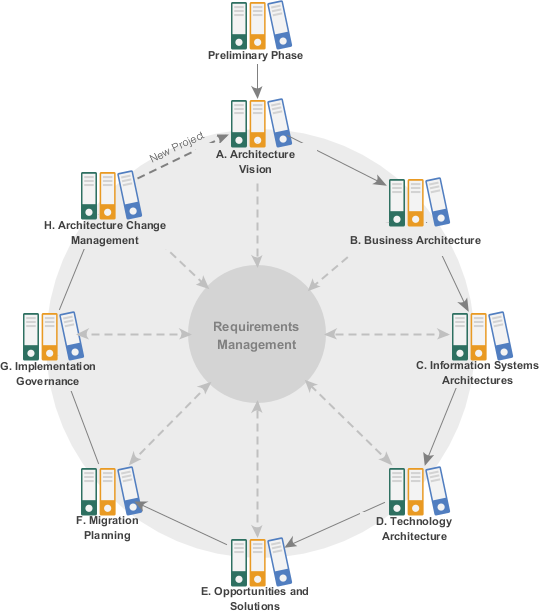
While the TOGAF Architecture Development Method (ADM) provides a robust, iterative process for designing enterprise architectures, it lacks the nuanced, granular vocabulary needed to articulate the business motivations behind every architectural decision.
Enter the Business Motivation Model (BMM)—a standardized, formal model from the Object Management Group (OMG) designed specifically to capture and express the “why” behind strategic decisions.
🔍 This guide provides a comprehensive, practical, and actionable roadmap for integrating BMM into the TOGAF ADM—enhancing strategic alignment, traceability, and governance—without replacing TOGAF’s proven framework.
Core Concepts: What Is BMM?
The Business Motivation Model (BMM) is an OMG standard (ISO/IEC 20351) that defines a structured vocabulary for describing business motivations in enterprise strategy. It enables organizations to:
-
Clearly state what the business wants to achieve (Ends)
-
Specify how it plans to achieve those ends (Means)
-
Identify what factors influence this progress (Influencers)
-
Evaluate the impact of those factors (Assessments)
BMM is not a standalone methodology—it’s a conceptual framework that adds depth and clarity to strategic discussions and architectural planning.
📚 Key BMM Concepts & Definitions

| Concept | Description | Example |
|---|---|---|
| Vision | A long-term aspiration or desired future state of the organization | “We envision a customer-centric, digitally enabled bank by 2030.” |
| Desired Result | A high-level outcome or goal the organization seeks to achieve | “Achieve a 30% increase in customer satisfaction.” |
| Goal | A general statement of intent, often aligned with organizational strategy | “Improve digital customer experience by 2025.” |
| Objective | A measurable, time-bound milestone toward a Goal | “Reduce average response time to customer inquiries from 48 hours to 8 hours by Q4 2025.” |
| Strategy | A course of action or plan to achieve a Goal | “Launch a mobile-first customer portal to improve access.” |
| Tactic | A detailed, actionable step supporting a Strategy | “Develop a mobile app with chatbot support and auto-responding FAQs.” |
| Business Policy | A high-level rule or principle guiding decisions | “All customer data must be stored in secure, encrypted environments.” |
| Business Rule | A specific, enforceable condition or constraint | “Any personal data shared with third parties must be consented to by the user.” |
| Influencer | Any internal or external force that affects Ends or Means | “Regulatory changes in data privacy laws (e.g., GDPR), rising competition from fintechs.” |
| Assessment | A judgment of an Influencer’s strength, impact, or risk | “GDPR compliance effort will increase development cost by 15% (SWOT).” |
| Potential Impact | How an Influencer affects the organization’s ability to achieve Ends | “Increased compliance costs may delay launch of new services.” |
✅ BMM provides finer granularity than TOGAF’s basic Driver/Goal/Objective model. For instance:
BMM separates Policy (guiding principle) from Rule (enforceable condition)
Explicitly defines Influencers and Assessments as distinct from drivers
Offers a full chain: Ends → Means → Influencers → Assessments
Why Integrate BMM with TOGAF ADM?
| Benefit | Explanation |
|---|---|
| ✅ Strategic Alignment | Ensures every architectural decision supports a clear business motivation. |
| ✅ Traceability | Enables full visibility from business ends (Vision) → architecture (systems) → assessments (risks). |
| ✅ Governance | Helps identify policy violations, compliance risks, and change triggers. |
| ✅ Change Impact Analysis | Identifies which Influencers or Assessments could disrupt strategy. |
| ✅ Stakeholder Communication | Provides a common language for business leaders and architects to discuss “why” changes matter. |
| ✅ Complements ArchiMate | BMM’s Motivation Layer provides a formal basis for modeling in ArchiMate. |
💡 Key Insight: TOGAF provides the process; BMM provides the reasoning. Together, they form a powerful, value-driven architecture approach.
Mapping BMM to TOGAF & ArchiMate Motivation Elements
Below is a detailed mapping of BMM concepts to the closest equivalents in TOGAF and ArchiMate. This enables seamless integration and avoids duplication.
| BMM Concept | Closest TOGAF/ArchiMate Equivalent | Notes |
|---|---|---|
| Vision | Goal (high-level), Vision Statement | Often appears in Phase A stakeholder maps and architecture vision documents. |
| Desired Result | Goal or Objective | May be used to define goals in business architecture. |
| Goal | Goal (in TOGAF Content Metamodel) | Broader outcome; can cascade into Objectives. |
| Objective | Objective (TOGAF), SMART targets | Used to measure progress toward Goals. |
| Strategy | Course of Action (in TOGAF), ArchiMate Strategy | High-level plan; can be mapped to business capabilities. |
| Tactic | Course of Action (detailed), Requirement | Operational means; links to process or capability gaps. |
| Business Policy | Principle (in TOGAF), ArchiMate Policy | Strategic rule; often tied to compliance or governance. |
| Business Rule | Requirement, Constraint (in TOGAF) | Enforceable, operational governance rule. |
| Influencer | Driver (in TOGAF), ArchiMate Influencer | External/internal forces affecting strategy. |
| Assessment | Assessment (in ArchiMate), Gap/Impact analysis | Quantifies influence (e.g., SWOT, PESTLE). |
| Potential Impact | Driver impact, Risk/Opportunity matrix | Used in change impact analysis. |
⚖️ Important: TOGAF’s built-in Content Metamodel (e.g., Driver, Goal, Objective) is sufficient for basic motivation, but lacks the nuance of BMM. BMM extends these concepts with better definitions, structure, and traceability.
How to Integrate BMM Across the TOGAF ADM Phases
The ADM is an iterative, cyclic process. BMM integration is most impactful in early phases but provides end-to-end traceability throughout.
🔹 Phase 1: Preliminary Phase – Setting the Stage
Objective: Establish BMM as a foundational framework for business motivation.
Activities:
-
Define BMM as an extension to the TOGAF Content Metamodel (not replacement).
-
Establish governance: Who owns Ends (business leaders), who owns Means (architects)?
-
Select tooling that supports both BMM and TOGAF (e.g., Sparx EA, Visual Paradigm, Bizzdesign).
-
Develop organization-specific BMM templates (e.g., Vision → Goals → Influencers → Assessments).
Output:
-
BMM modeling guidelines
-
Tooling setup and configuration
-
Governance rules for BMM use
📝 Tip: Use this phase to conduct a motivation gap analysis—compare current business goals with what is being modeled in the ADM.
🔹 Phase A: Architecture Vision
Primary Integration Point – BMM drives the entire vision.
Activities:
-
Define Vision and Desired Results
-
Identify key Influencers (e.g., inflation, competition, regulation)
-
Define Goals and Objectives that cascade from Vision
-
Outline Strategies and Tactics for achieving those goals
-
Map BMM elements to TOGAF artifacts:
-
Vision → Architecture Vision document
-
Goals → Stakeholder Map, Value Chain
-
Influencers → Risk register, PESTLE analysis
-
Example:
Vision: “Become the leading digital bank in Europe by 2030.”
Goal: “Improve digital customer experience by 2025.”
Objective: “Reduce average response time to customer inquiries from 48 hours to 8 hours by Q4 2025.”
Influencers:
Regulatory (GDPR compliance – negative impact)
Competition (Fintechs disrupting services – negative impact)
Market demand (customers want instant support – positive impact)
Assessment:
GDPR will increase dev cost by 15%, delay launch by 6 months.
Output:
-
BMM model showing full motivation chain
-
Traceable to Architecture Vision document and Stakeholder Map
-
Early identification of risks and dependencies
🔎 Why It Works: This phase ensures the architecture is not built in a vacuum—it starts with a clear why.
🔹 Phase B: Business Architecture
Objective: Link BMM “Means” (Strategies, Tactics) to business capabilities and processes.
Activities:
-
Refine Strategies → Tactics
-
Map Policies → Rules to business capabilities
-
Identify capability gaps that require new processes or roles
-
Use BMM to justify capability investments
Example:
A “tactic” to improve digital experience: “Develop a mobile app with chatbot support.”
→ Requires new capability: Customer self-service
→ Requires new process: Chatbot response workflow
→ Requires new policy: All AI responses must be logged and reviewed monthly (Policy)
→ Enforceable rule: Every chatbot interaction must be recorded and accessible for audit (Rule)
Output:
-
Business capability map showing alignment with BMM Means
-
Traceability from Tactic → Business Process → Capability Gap
-
Justification for new capabilities or process changes
📌 Key Insight: BMM helps answer: “Why are we adding this process?” — not just what it does.
🔹 Phases C & D: Information Systems & Technology Architectures
Objective: Align IT decisions to BMM Ends and Means.
Activities:
-
Trace Goals, Objectives, Policies to technical requirements
-
Use Influencers to prioritize features (e.g., regulatory compliance → security requirements)
-
Map requirements to technology capabilities and system designs
Example:
BMM Goal: “Improve data access speed”
→ Requires new database architecture
→ Influencer: “Cloud migration is underway” → impacts deployment timing
→ Assessment: “Migration may increase latency by 10% until optimized”
→ Solution: Deploy caching layer → traceable back to Goal
Output:
-
Traceability matrix: Requirement → BMM Element (e.g., Goal, Policy)
-
Risk assessment based on Influencers
📊 This phase ensures technical decisions are not arbitrary—they serve business intent.
🔹 Phase E: Opportunities & Solutions
Objective: Evaluate solution alternatives using BMM.
Activities:
-
Score each solution option against BMM elements (e.g., does it support Goal? Does it mitigate risk?)
-
Use Assessment data to score impact (e.g., “Low compliance risk = high score”)
-
Evaluate which solution best supports the business motivation
Example:
| Option | Supports Goal? | Mitigates Influencer Risk? | Score |
|---|---|---|---|
| Mobile App | ✅ | ❌ (no GDPR support) | 6/10 |
| AI Chatbot | ✅ | ✅ (automates data handling) | 9/10 |
✅ The AI chatbot wins because it supports both the goal and reduces compliance risk.
Output:
-
Solution matrix with BMM-based justification
-
Gap/dependency analysis linked to business motivation
🔹 Phase F: Migration Planning
Objective: Prioritize implementation based on BMM urgency.
Activities:
-
Rank initiatives by Influencer impact (e.g., high regulatory risk = high priority)
-
Link migration roadmap to Goals and Objectives
-
Use BMM to justify timing and sequencing
Example:
Regulatory Influencer: “New data privacy law takes effect in 6 months”
→ Migration of legacy systems to comply must happen before deadline
→ This influences roadmap sequencing
Output:
-
Prioritized roadmap with BMM justification
-
Clear link between architecture work and business motivation
🔹 Phases G & H: Implementation & Change Management
Objective: Monitor and maintain alignment over time.
Activities:
-
Use BMM to perform change impact analysis
-
Check for policy violations (e.g., new app violates data policy)
-
Monitor Influencers for shifts (e.g., new market entrants)
-
Update BMM model in each cycle to reflect realized vs. planned outcomes
Example:
After launch, a new influencer emerges: “New competitor launches AI chatbot.”
→ This triggers a new BMM update:
New Influencer → Reassess Goals
New Assessment → Update Risk Register
New Strategy → “Invest in AI differentiation”
Output:
-
Dynamic BMM model updated after each cycle
-
Change impact report showing motivation traceability
🔄 This ensures the architecture remains adaptive and responsive.
Practical Best Practices & Tips
| Best Practice | Why It Works | How to Apply |
|---|---|---|
| ✅ Use BMM templates in early phases | Reduces ambiguity and accelerates modeling | Create a “Vision → Goals → Influencers” template for each project |
| ✅ Maintain explicit traceability | Enables transparency and accountability | Use tools with traceability (e.g., Sparx EA) to link BMM elements to ADM outputs |
| ✅ Iterate BMM in each ADM cycle | Keeps motivation current | Update BMM in Phase H after implementation review |
| ✅ Assign ownership | Prevents siloed thinking | Business leaders own Ends; Architects own Means linkage |
| ✅ Communicate BMM results | Builds trust with stakeholders | Generate strategy maps, motivation dashboards |
| ✅ Avoid over-modeling | Focus on high-impact elements | Limit BMM to 3–5 key Influencers and 2–3 Goals per initiative |
| ✅ Train teams on BMM mappings | Ensures consistency | Conduct workshops on BMM ↔ TOGAF mappings |
| ✅ Start small (pilot) | Reduces risk | Apply BMM in one business unit or project before scaling |
🚀 Pro Tip: Combine BMM with ArchiMate Motivation Layer for visual modeling. BMM provides the content; ArchiMate provides the structure.
Tooling Support for BMM + TOGAF Integration
| Tool | Features | Use Case |
|---|---|---|
| Sparx Enterprise Architect | TOGAF MDG + BMM support, full traceability | Enterprise-wide BMM modeling with TOGAF traceability |
| Visual Paradigm | BMM Guide-Through, auto-generates ArchiMate views | Rapid prototyping of motivation models |
| Bizzdesign | BMM + ArchiMate integration, traceability engine | Complex enterprise strategy modeling |
| ArchiMate (via BMM Layer) | Visual representation of motivations | Strategic alignment dashboards |
💡 All tools support realization links, influence links, and aggregation—key for full traceability.
Challenges & How to Overcome Them
| Challenge | Mitigation Strategy |
|---|---|
| Over-modeling | Focus on high-impact, high-stakes business goals; limit to 3–5 Influencers per initiative |
| Lack of understanding | Conduct training sessions on BMM concepts and TOGAF mappings |
| Resistance from business leaders | Show ROI via improved alignment and decision clarity |
| Tooling complexity | Start with simple BMM templates; expand as teams gain confidence |
| Inconsistent usage | Define governance: Who owns Ends? Who owns traceability? |
🚧 Remember: BMM is not a checklist. It’s a lens to understand the why behind every decision.
Real-World Example: Banking Sector – Digital Transformation
Background:
A regional bank wants to improve digital customer experience and reduce operational costs.
Step-by-step BMM Integration:
-
Vision: “Become a fully digital-first bank by 2027.”
-
Goal: “Improve customer satisfaction scores by 25% in 3 years.”
-
Objective: “Reduce average support response time from 48 hours to 8 hours by Q4 2025.”
-
Strategies:
-
Launch mobile app with chatbot
-
Automate routine inquiries
-
-
Tactics:
-
Develop AI chatbot
-
Implement automated FAQ system
-
-
Influencers:
-
GDPR (negative impact → requires secure data handling)
-
Competition (Fintechs offering instant chat → negative impact)
-
Customer demand (for faster service → positive impact)
-
-
Assessment:
-
GDPR compliance will add 15% to development cost
-
Fintech competition may reduce market share by 10%
-
-
Business Rules:
-
All AI responses must be logged and auditable
-
No customer data stored outside secure cloud environment
-
Outcome:
-
Architecture team designed a secure, compliant chatbot system
-
Implemented traceability from Goal → Objective → Tactic → System Requirement
-
Identified compliance as a key influencer → led to earlier investment in secure cloud
-
Post-launch review updated BMM model to include new influencer: “Customer backlash over slow service”
✅ Result: A data-driven, motivation-based architecture that directly supports business goals.
Conclusion: The Power of BMM in TOGAF ADM
Integrating the Business Motivation Model (BMM) into the TOGAF ADM transforms enterprise architecture from a technical exercise into a strategic, value-driven discipline.
Key Takeaways:
-
✅ BMM extends, not replaces, TOGAF’s motivation concepts
-
✅ It provides granularity, traceability, and clarity in business motivation
-
✅ It strengthens alignment, governance, and stakeholder communication
-
✅ It enables dynamic, responsive architecture through iterative BMM updates
-
✅ It works best when combined with ArchiMate for visual modeling
✅ Next Steps for Your Organization
-
Conduct a BMM Gap Analysis – Compare current TOGAF motivation elements to BMM depth
-
Pilot BMM in one project or business unit – Start with a clear Vision and 1–2 Influencers
-
Develop BMM templates – For Vision, Goals, Strategies, Influencers
-
Train your team – On BMM concepts and TOGAF mappings
-
Integrate with your tooling – Use Visual Paradigm Desktop
-
Iterate and refine – Update BMM after every ADM cycle
🏁 With BMM in place, your architecture will no longer just support the business—it will drive it.
📚 References & Further Reading
-
Visual Paradigm Enterprise Architecture TOGAF Software : This resource describes how Visual Paradigm helps teams execute TOGAF ADMs through an automated guide-through process , including step-by-step instructions and deliverable generation.
-
Enterprise Architecture Framework Practice Guide : This article explores how to apply enterprise architecture frameworks in real-world projects and serves as a core reference for understanding the implementation of frameworks such as TOGAF in enterprises.
-
Business Motivation Model (BMM) Strategic Planning Solution : Although the title is in English, this tool is integrated into the Chinese enterprise suite of Visual Paradigm to align business objectives, drivers, and initiatives with corporate vision.
-
BPMN 1000: Business Process Modeling Guide : This guide details BPMN notation, an indispensable modeling standard in TOGAF ADM business architecture (Phase B).
-
Deep Learning AI Canvas : This is a localized strategic analysis template that supports complex AI project planning in the initial or vision phase of ADM .
-
Visual Paradigm AI Chatbot Multilingual Support Update : The official announcement shows that the AI chatbot now supports Simplified Chinese, and users can automatically generate complex architecture diagrams, including BMM and TOGAF ADM, using Chinese commands
-
UML Modeling, Software Processes and Tools : This article explains how to use visualization tools to develop efficient solutions that supportmultiple international modeling standards, including ArchiMate and TOGAF .
-
Scope Management Overview: Inputs/Tools & Techniques/Outputs : In the context of TOGAF ADM project management, this guide describes how to define and control project scope, and is an essential practical reference for architects.
-
Visual Paradigm: A Comprehensive Diagramming and Project Management Solution : This article provides a comprehensive overview of Visual Paradigm’s features in Chinese, highlighting its advantages in enterprise-level architecture modeling and project management.
-
MODAF Architecture Tools and Report Generation : This section introduces how to instantly generate standard-compliant (such as TOGAF or MODAF) architecture documents using the intelligent report generator Doc. Composer
🏷️ Final Thought
“The best architecture is not built in isolation—it is built in service of a clear, compelling business reason.”
By integrating BMM into the TOGAF ADM, you ensure that every line of code, every process change, and every system decision is rooted in business intent, making your enterprise architecture not just technically sound—but strategically powerful.
Related posts:
 Comprehensive Tutorial on ArchiMate Viewpoints
 Comprehensive Guide: AI-Powered TOGAF ADM Guide-Through
 ArchiMate Unlocked: A Practitioner’s Guide to Visualizing Enterprise Architecture with AI-Powered Tools
 A Practical Case Study of TOGAF ADM Implementation with Visual Paradigm and ArchiMate at Tech-Innovate Solutions